Bay Area Tremors
Magnitude 3.8 Earthquake Strikes Bay Area Near San Leandro, Aftershocks Prompt Transit Delays
Key Points
Epicenter reported by the LA Times as near the Oakland Zoo, underscoring proximity to the Hayward fault and its link to the region's historical seismic activity (the 1868 Hayward quake). The article also notes fault-specific risk with a 2015 USGS projection of a 72% chance of a magnitude 6.7+ event by 2045, including fault-specific probabilities.
The earthquake’s magnitude was revised downward in stages: initially reported as 4.1, then 3.9, and later downgraded to 3.8, illustrating how early measurements are refined as data come in.
Following the quake, there were 3.0 and 2.8 aftershocks reported in quick succession, with witnesses across the Bay Area feeling additional shaking.
There was a nearby prior quake recorded at magnitude 3.8 just before the 3.0 event near San Leandro, indicating a sequence of seismic activity in a short span.
Bay Area transit officials paused safety inspections and advised of brief delays, with BART specifically reducing speeds to complete inspections and anticipate about 20 minutes of travel delays.
A magnitude 3.8 earthquake struck near San Leandro in Alameda County at 8:30 a.m. Thursday, shaking the Bay Area from Oakland to San Francisco and as far as Santa Rosa and Stockton, according to NBC Bay Area. No damage has been reported. The quake was initially logged at 4.1 before being revised down to 3.9, then 3.8, as more seismic data came in.
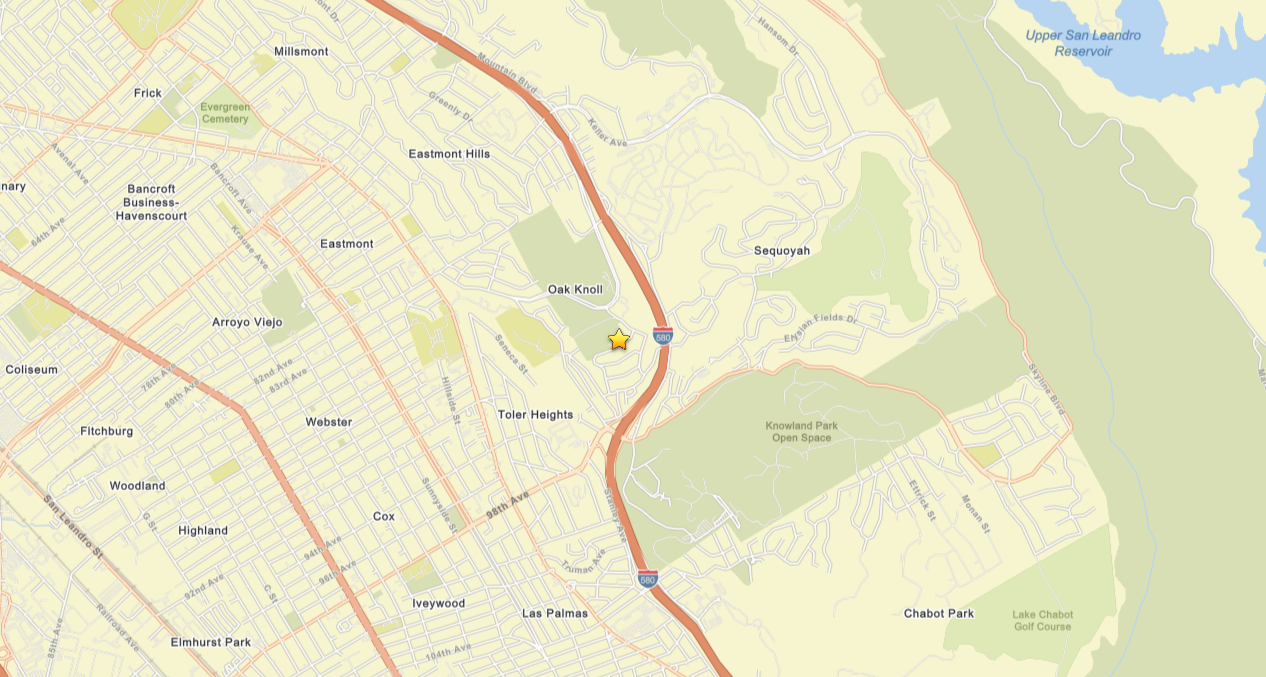
The epicenter sat roughly 2 miles north-northeast of San Leandro at a depth of about 3 miles, close to the Hayward fault. A 3.0 aftershock and a 2.8 aftershock followed in quick succession, Berkeleyside reported.
BART Slows Down, Delays Last About 20 Minutes
Bay Area Rapid Transit paused safety inspections right after the shaking stopped. BART reduced train speeds while crews checked the tracks and infrastructure, Berkeleyside reported. Riders faced about 20 minutes of delays as a precaution. No damage to the system was found. On-air TV anchors in the Bay Area were also caught on camera feeling the shaking during live broadcasts.
Epicenter Near Oakland Zoo Puts Hayward Fault in Focus
The quake was centered near the Oakland Zoo, placing it squarely in one of California's most dangerous seismic zones, according to the LA Times. The Hayward fault runs directly through the East Bay. The region has a long memory of big quakes — the 1868 Hayward earthquake caused widespread destruction across the area.
The risk is not just historical. A 2015 USGS projection found a 72% chance of a magnitude 6.7 or larger earthquake hitting the Bay Area by 2045, the LA Times noted. The Hayward fault alone carries significant probability within that estimate, making Thursday's quake a sharp reminder of what the region faces.
Magnitude Revised Three Times as Data Rolled In
Early seismic readings put the quake at 4.1. That number dropped to 3.9, then settled at 3.8 as scientists gathered more data, KMPH reported. This kind of revision is normal. Seismographs closest to the epicenter send data first. Readings from farther stations then refine the estimate. Some outlets still listed 4.1 in early reports, reflecting how fast news moves versus how fast science moves.
Eleven people filed felt reports through the USGS "Did You Feel It?" system. Residents in Berkeley, Oakland, and Danville all submitted responses. USGS placed the depth at between 3.0 and 3.2 miles — a shallow quake, which tends to feel stronger at the surface even at lower magnitudes.
Bay Area Residents Felt It From Stockton to Santa Rosa
Reports of shaking came in from across a wide area. People in San Francisco, Berkeley, Santa Rosa, and as far inland as Stockton said they felt the quake, according to Head Top Topics. The shallow depth helped the shaking travel. Residents described brief but noticeable jolts.
Thursday's event was part of a short seismic sequence. A separate 3.8 quake was recorded near San Leandro just before the 3.0 aftershock, KMPH noted. The cluster of quakes within a short span is consistent with typical aftershock patterns following a moderate event on or near a major fault.
Sentiment
Mostly NegativePublishers
24
Articles
20
Reach
44