Ford's EV Revolution
Ford Retools Louisville Plant for Fathom EV Production, Creating Thousands of Jobs
Key Points
Prototypes for the Fathom are being hand-built at Ford’s New Model Product Development Center in Dearborn in close collaboration with Louisville teams, using the same operators who helped design the vehicle and will later produce it.
Louisville Assembly Plant is described as the first to adopt Ford’s Universal Electric Vehicle Production System, which uses a three-section assembly tree (front, rear, battery deck) and larger aluminum castings to reduce parts.
Ford’s broader investment in the project totals about $5 billion to create roughly 4,000 jobs across the Louisville plant and the BlueOval Battery Park in Michigan.
The plant’s digital and connectivity infrastructure is being significantly upgraded, including Wi-Fi enhancements that increase access points from 385 to 1,080 to support on-site software quality checks.
Ford has publicly stated that the new production approach could yield roughly 40% faster assembly, though other reporting indicates a cross-check figure of about 15% faster, highlighting a range of estimates during rollout.
Ford's Louisville Assembly Plant is on track to begin producing the Fathom electric pickup truck in the first quarter of 2027, following a $2 billion factory overhaul completed in under a year, according to TechCrunch. The Fathom, priced under $30,000, is Ford's bet on affordable EVs that can compete with Tesla and Chinese automakers.
The conversion makes Louisville the first Ford plant to use the company's new Universal Electric Vehicle Production System. The Verge reports the investment is part of a broader $5 billion commitment that will create roughly 4,000 jobs across Louisville and a related battery facility in Michigan.
Louisville Plant Gets a Total Rebuild in Record Time
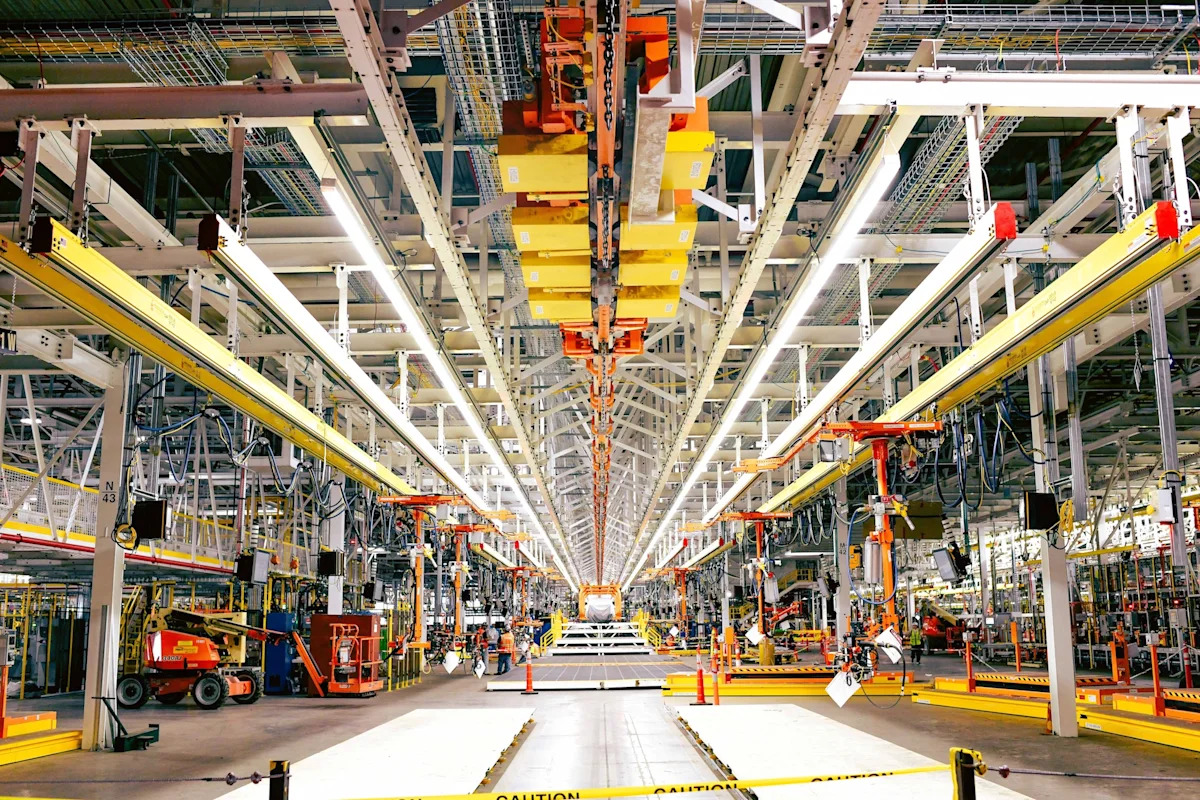
Ford closed the Louisville Assembly Plant about two years ago to gut and retool it for electric vehicle production. The 3-million-square-foot facility has been redesigned from the ground up, according to Head Topics. The speed of the conversion — done in under a year — is itself a milestone for the automaker.
The plant's digital infrastructure got a major upgrade too. Wi-Fi access points jumped from 385 to 1,080, Yahoo Finance reported. That connectivity is essential for running on-site software quality checks on vehicles as they move through the assembly line.
Ford's New Assembly System Aims for 40% Faster Build Times
The Universal EV Production System replaces the old straight-line assembly process with a three-section "assembly tree," according to Work Truck Online. Workers build the front, rear, and battery deck as separate subassemblies at the same time. Then they join the sections together, rather than moving one car down a single long line.
Ford says the new method could cut assembly time by roughly 40%. The Fathom uses single-piece aluminum castings, shorter wiring harnesses, and fewer total parts to make that speed possible. Ford executives describe the approach as "foundationally different" from how the company has built cars before.
Hand-Built Prototypes Bridge the Gap Between Dearborn and Louisville
Before mass production starts, Ford is hand-building Fathom prototypes at its New Model Product Development Center in Dearborn, Michigan. The engineers and plant workers doing it are the same people who helped design the truck and will later build it in Louisville, according to TechCrunch. Ford says that overlap is intentional.
The dual-site approach lets Louisville and Dearborn teams catch problems early. Workers flag design issues before they become assembly-line headaches. Ford sees this collaboration as key to hitting its 2027 production launch on time.
A Sub-$30,000 EV Designed to Beat Tesla on Price and Speed
The Fathom is a midsize electric pickup truck priced under $30,000 — well below most EVs on the market today. The Verge notes the $28,000 price point is central to Ford's strategy of winning buyers who cannot afford a Tesla or a Rivian. Ford is targeting the mass market, not the premium segment.
Ford's broader goal is to scale up EV production at lower cost and higher speed. The Louisville plant and the BlueOval Battery Park in Michigan together represent a $5 billion investment and 4,000 new jobs, per Yahoo Finance. If the Fathom lands on time and on budget, Ford says it will form the foundation for future high-volume EV models.
Sentiment
Mostly PositivePublishers
12
Articles
8
Reach
20


