Argentina Pursues Major LNG Exports
Argentina LNG's $51 Billion Project Seeks Key Investment Incentives for Vaca Muerta Gas Exports
Key Points
Export revenues are projected to total about $10 billion per year for 20 years, underscoring the project’s long-term financial scale beyond the initial build phase.
The project is expected to create up to 40,000 jobs at peak construction and about 8,000 permanent roles during operations, highlighting a substantial local employment impact.
Local procurement is anticipated to reach roughly $15 billion, reflecting a strong emphasis on domestic supplier participation in the LNG value chain.
The Large Investment Incentive Regime (RIGI) is open to investments above about $200 million and provides stability on taxes, customs duties, and foreign exchange to de-risk long-term capital projects, aiming to align Argentina’s framework with global standards.
Argentina LNG, a joint venture of YPF, Eni, and XRG, has applied to join Argentina's Large Investment Incentive Regime (RIGI) for its $51 billion LNG project, according to LNG Prime. The move is a key step toward locking in tax, customs, and foreign-exchange protections for what YPF calls the largest private investment in Argentina's history.
The project aims to turn gas from the Vaca Muerta shale formation into liquefied natural gas exports. Two floating LNG units in the Gulf of San Matías would together handle 12 million tonnes per year, with a final investment decision targeted for end of 2026 and first output around 2031, Gasworld reported.
What RIGI Means and Why the Project Needs It
RIGI is open to any project investing above roughly $200 million. It gives investors stable rules on taxes, customs duties, and foreign exchange for decades. That stability matters for a project that will take years to build and cost tens of billions of dollars, according to Gasworld.
Without RIGI, investors face the risk that Argentina could change its rules mid-project. Locking in protections now helps Argentina LNG meet the standards that global energy buyers and lenders expect, LNG Prime noted. The application puts the deal one step closer to a formal go-ahead.
A $10 Billion-Per-Year Export Machine Built on Vaca Muerta
Once running, the project is expected to generate about $10 billion per year in export revenues for 20 years. That long revenue tail is what makes the upfront cost — roughly $29 billion for just the first phase — worth the risk for the partners, according to Yahoo Finance.
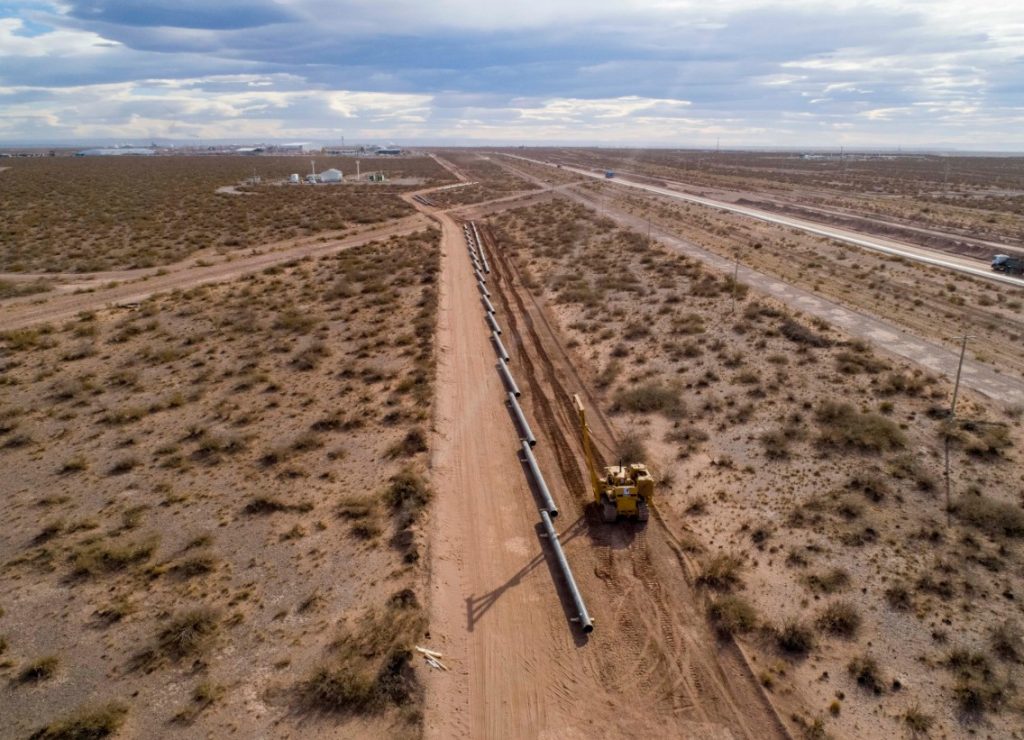
The full project stretches from gas wells in Neuquén province all the way to offshore floating LNG units. It includes dedicated pipelines, processing plants, and liquids fractionation trains. Baker Hughes has already been contracted to supply gas compression for the San Matías pipeline, showing how far supplier planning has advanced, LNG Prime reported.
40,000 Construction Jobs and $15 Billion for Local Suppliers
The project is expected to create up to 40,000 jobs at peak construction. About 8,000 permanent roles would remain once operations begin. That scale makes it one of the biggest single job-creation efforts in Argentina's recent history, according to Eni's filing cited by Yahoo Finance.
Local procurement is projected to reach around $15 billion over the life of the project. That means Argentine companies — suppliers, manufacturers, service firms — stand to capture a large share of the spending. Proponents say this domestic focus strengthens the case for government support through RIGI, Gasworld noted.
What Happens Next Before the 2026 Investment Decision
Argentina LNG still needs RIGI approval before it can move forward with confidence. After that, the partners must reach a final investment decision by the end of 2026. Only then will full construction spending begin, according to LNG Prime.
If everything stays on track, the first LNG exports could flow around 2031. The partners — Argentina's state oil company YPF, Italy's Eni, and Abu Dhabi's XRG — are framing the project as a chance to turn Vaca Muerta into a global LNG export hub, Market Screener reported.
Sentiment
Mostly PositivePublishers
10
Articles
8
Reach
18