China-Korea Realign
Chinese Foreign Minister Wang Yi Visits Seoul to Strengthen Ties Ahead of APEC Summit
Key Points
Wang Yi is expected to have a luncheon with South Korea's National Security Adviser Wi Sung-lac, with a separate possible meeting with Wi Sung-rak, Director of the National Security Office, highlighting a focus on high-level security coordination.
Beijing underscores deep economic interdependence and seeks concrete assurances, noting South Korea-China trade runs into hundreds of billions of dollars annually with key sectors like semiconductors, automotive parts and petrochemicals, while pushing back against a full alignment of Korea's tech export controls with US restrictions.
The talks are expected to include concrete discussions on lifting the Hallyu (Korean Wave) ban and advancing the second phase of the Korea-China Free Trade Agreement (FTA), indicating a push to broaden bilateral economic and cultural cooperation.
This visit marks the first domestically held South Korea-China foreign ministers' meeting since the Lee administration, underscoring the high diplomatic significance of the dialogue.
President Lee Jae Myung is set to receive Wang Yi with Lee planning to extend regards to Chinese President Xi Jinping, signaling ongoing bilateral engagement at the highest political level beyond ministerial talks.
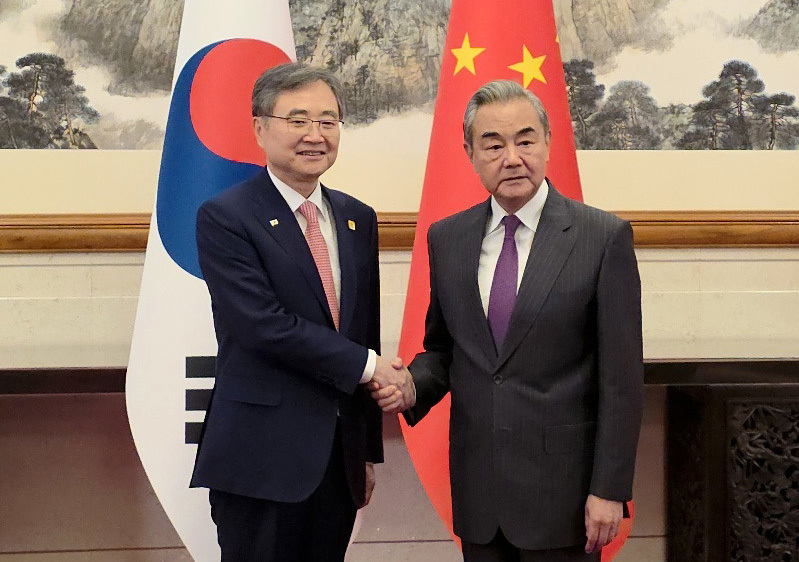
Chinese Foreign Minister Wang Yi will visit Seoul on August 19–20 for talks with South Korean Foreign Minister Cho Hyun, marking his first official trip to South Korea in five years, according to Seoul Economic Daily. President Lee Jae Myung will also receive Wang, with Lee expected to pass personal regards to Chinese President Xi Jinping — a signal of engagement at the highest political level.
The visit is the first domestically held South Korea–China foreign ministers' meeting since the Lee administration took office, according to Head Topics. Talks are set to cover North Korea, bilateral trade, and regional security — all ahead of November's APEC summit in Shenzhen.
Five-Year Gap Closed With High-Stakes Seoul Meeting
Wang Yi's last official visit to South Korea was five years ago, making this trip a significant diplomatic reset. The two-day schedule is packed. Wang will hold formal foreign ministers' talks, attend a luncheon with National Security Adviser Wi Sung-lac, and potentially meet Wi Sung-rak, Director of the National Security Office, according to Ledger Enquirer. That level of access signals Beijing wants more than just a photo opportunity.
The visit comes as South Korea recalibrates its foreign policy under President Lee. Seoul is balancing its security alliance with Washington against deep economic ties with Beijing. Wang's trip is Beijing's clearest move yet to keep Seoul from drifting fully into the US orbit.
Hundreds of Billions in Trade Keep Beijing Pressing Seoul
South Korea–China trade runs into hundreds of billions of dollars each year. Key sectors include semiconductors, automotive parts, and petrochemicals. Beijing wants concrete assurances from Seoul that it will not fully align its tech export controls with US restrictions, according to Herald Sun. That pressure reflects how much China depends on South Korean technology supply chains.
A second phase of the Korea–China Free Trade Agreement is also on the table. The first phase, signed in 2015, left major sectors like services and investment largely untouched. Advancing phase two would deepen economic integration at a time when both sides face global trade uncertainty.
Hallyu Ban Lift and Cultural Diplomacy on the Agenda
One of the more unexpected items on the agenda is South Korea's Hallyu — or Korean Wave — policy. China restricted Korean pop culture exports, including K-dramas and K-pop, after Seoul deployed a US missile defense system in 2017. Lifting that informal ban would be a visible and popular sign of improving ties, according to Head Topics.
Cultural diplomacy may seem soft, but the Hallyu industry is worth billions of dollars to South Korea. A formal easing of restrictions would give President Lee a domestic win and give Beijing a goodwill gesture that costs little. Both sides appear motivated to move on this.
North Korea and Regional Security Cloud the Talks
Behind the trade and cultural agenda sits a harder conversation about North Korea. Pyongyang's growing military cooperation with Russia has unsettled both Seoul and Washington. Beijing, which holds the most leverage over North Korea, has not used it forcefully. South Korea will push for China to play a more active stabilizing role, according to Ledger Enquirer.
The broader trilateral dynamic involving the US and Japan adds pressure. Seoul's deepening security cooperation with Washington and Tokyo concerns Beijing. Wang Yi's visit is partly designed to slow that drift. The November APEC summit in Shenzhen gives both sides a deadline — and an incentive — to show progress before the world is watching.
Sentiment
Mostly PositivePublishers
17
Articles
86
Reach
103