Roman Space Telescope Launch
NASA's Roman Space Telescope Launches Successfully Aboard a SpaceX Falcon Heavy
Anonymous
Key Points
1
The mission cleared Max Q, the peak dynamic pressure phase of ascent, signaling successful progression into higher-altitude flight as the Falcon Heavy continues toward orbit.
2
Two Falcon Heavy side boosters separated and began controlled returns to land near the launch site, part of SpaceX's reusable-rocket demonstration while the center core continues accelerating Roman toward orbit (including boost-back guidance).
3
SES-2 burn lasts about two minutes; SECO-2 occurs around T+8 minutes 28 seconds, followed by Roman’s separation from the second stage roughly five minutes later.
4
The Roman Space Telescope carries a cutting-edge wide-field infrared camera designed to outpace Hubble in survey speed; the mission is planned for five to ten years, with science observations starting in December and first images anticipated in 2027, and a reported value around $4.3 billion.
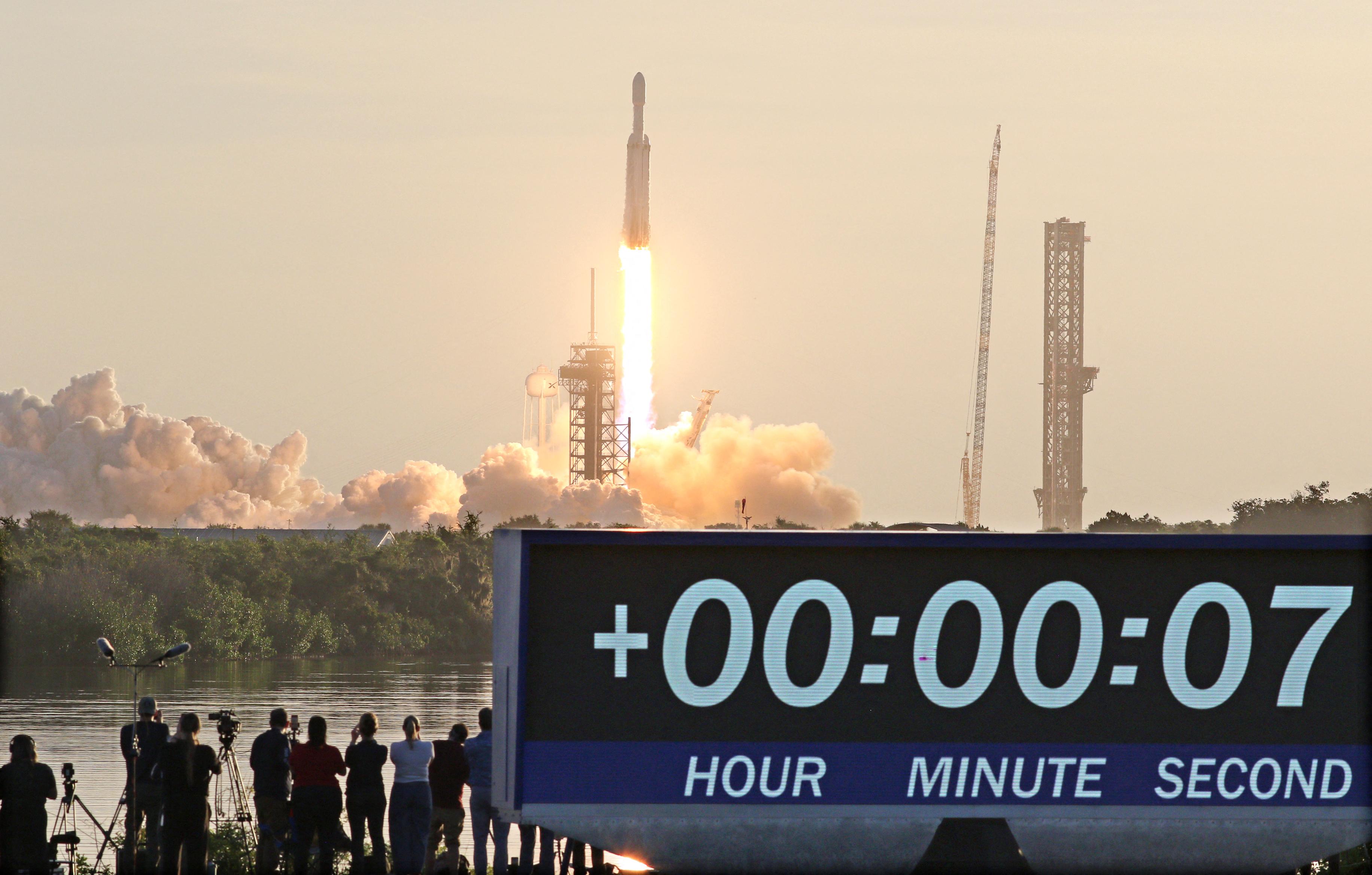
NASA's Nancy Grace Roman Space Telescope lifted off Sunday from Kennedy Space Center aboard SpaceX's Falcon Heavy rocket, beginning its mission to study dark energy, dark matter, and distant exoplanets iHeart. The telescope cleared Max Q—the point of peak pressure during ascent—and progressed through critical early milestones including center core engine cutoff and stage separation, putting it on track for a precise orbit iHeart.
Falcon Heavy Booster Recovery Demonstrates Reusable Rocket Strategy
Two Falcon Heavy side boosters separated from the main vehicle during ascent and began controlled descents back toward the launch site iHeart. The side boosters landing intact showcases SpaceX's core innovation: rockets that fly multiple times rather than falling into the ocean after one use iHeart.
Roman Separation and Orbital Insertion Timeline
After the Falcon Heavy's second stage completed its SES-2 burn—lasting roughly two minutes—it performed the SECO-2 engine cutoff around eight minutes and 28 seconds after launch iHeart. About five minutes later, Roman separated from the rocket's second stage and began its journey toward becoming the fastest infrared survey instrument ever built iHeart.
Five-Year Mission to Map the Universe's Invisible Architecture
The Roman Space Telescope carries a wide-field infrared camera designed to survey the sky faster than the Hubble Space Telescope iHeart. The $4.3 billion mission is planned for five to ten years of operation, with science observations beginning in December and the first public images expected in 2027 iHeart.
Sentiment
Mostly PositiveNEGATIVENEUTRALPOSITIVE
Publishers
12
Articles
174
Reach
186
A
AnonymousAuthor