Defence Funding Row Deepens
UK Defence Secretary Healey Resigns Over Funding Dispute, Citing Rising Geopolitical Threats
Anonymous
Key Points
1
In his resignation letter, Healey said that after explaining he could not accept a Defence Investment Plan settlement that “does not give our Forces the resources they need,” he was “left with no other option than to submit my resignation.”
2
Healey warned that his intelligence assessment—and NATO allies’ assessments—indicate “there could be an attack by Russia on NATO as soon as 2030,” arguing “You know what defense needs.”
3
Reporting highlighted that the dispute has been driven in part by the difficulty of planning amid “huge geopolitical volatility” and as the United States “pivots away from protecting Europe,” with defence industry warning it cannot commit to long-term programmes without clarity.
4
A further internal-budget fight mentioned by the Daily Mail said Ed Miliband was resisting demands for savings of at least 1% within the Department for Energy Security and Net Zero, which could amount to more than £600 million from the capital budget—one of the sticking points over when and how spending targets would be met.
5
No10 had hoped to publish the Defence Investment Plan ahead of Starmer’s meeting with fellow leaders at an international summit next week, but that timing was missed due to the Treasury and Cabinet ministers “play[ing] hardball” over funding.
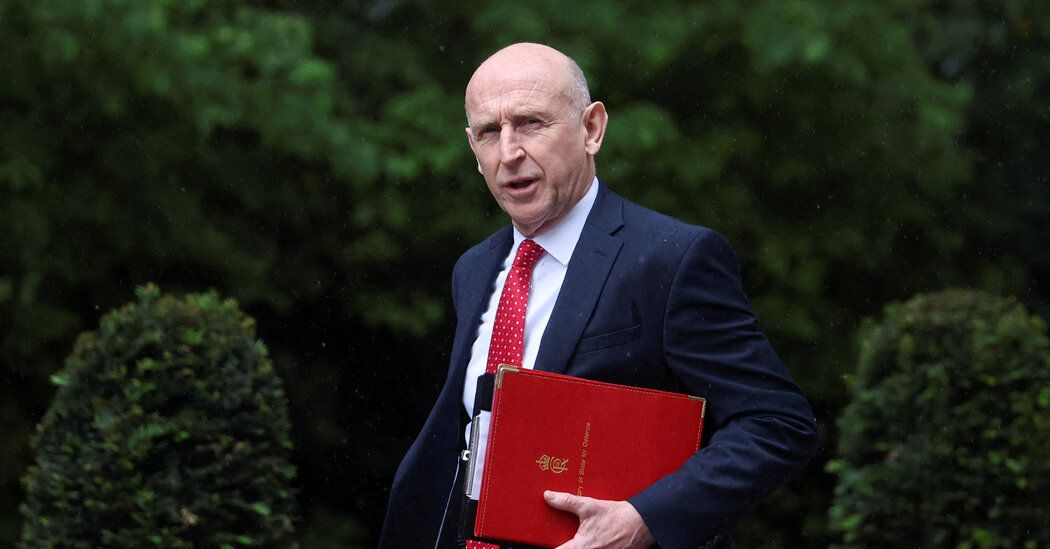
UK Defence Secretary John Healey resigned on June 11, 2026, after a bitter funding dispute with Prime Minister Keir Starmer's government. In his resignation letter, Healey said he was "left with no other option" after the Treasury refused to match what he called the minimum resources the armed forces need. His deputy, Armed Forces Minister Al Carns, quit alongside him, according to Al Jazeera.
The row centres on the Defence Investment Plan, which would raise UK defence spending to just 2.68% of GDP by 2030. Healey argued that was "well short" of what is required — especially as intelligence assessments warn Russia could attack NATO as soon as that same year, according to The Independent.
Treasury Offered £10 Billion, MoD Wanted £18 Billion
The core of the dispute was a £8 billion gap. The Treasury's final offer was a £10 billion uplift in real terms. The Ministry of Defence said it needed £18 billion to stabilise its equipment plan, according to The Herald. When no deal could be reached, Healey told Starmer directly he could not sign off on the settlement.
The funding model was also "backloaded" — meaning most money arrives late in the decade. General Sir Roly Walker, head of the British Army, privately warned that new tanks and drone swarms would not arrive until 2031. That is one year after the assessed window for a potential Russian attack on NATO, The Independent reported.
Healey Cited Russia Threat and US Pullback to Justify More Spending
Healey pointed to two urgent pressures. First, NATO intelligence — including assessments shared by allies — suggests Russia could launch an attack on NATO territory by 2030. Starmer himself warned of this risk at the Munich Security Conference in February 2026, according to the live research briefing. Second, the United States is pulling back from its role protecting Europe, forcing the UK to do more.
"Fiscal rules are irrelevant if the nation is not secure," Healey argued, according to The Independent. The government, he said, needed to spend more, faster. No. 10 and the Treasury pushed back, calling the 2.68% target "responsible" and noting it would represent the highest sustained defence spending since the Cold War, according to The Guardian.
Cabinet Splits Deepen as Energy Budget Also Under Fire
The fight did not stop at defence. To cover the MoD funding gap, Chancellor Rachel Reeves demanded 1% efficiency savings from other departments. Energy Secretary Ed Miliband was reported to be in "open revolt," resisting cuts of at least £600 million from his department's capital budget, according to Yahoo Finance.
The Defence Investment Plan was also published late. No. 10 had wanted to release it before Starmer's appearance at a NATO summit next week. That deadline was missed because Cabinet ministers and the Treasury were "playing hardball" over funding, according to Yahoo News UK. The Public Accounts Committee had already warned on June 8 that delays were damaging UK credibility with allies.
Defence Industry Warns It Cannot Plan Without Funding Certainty
Major contractors including BAE Systems and Babcock have warned they cannot commit to long-term programmes without clear government funding signals. The delay to the Defence Investment Plan left firms unable to make investment decisions, according to Al Jazeera. The National Shipbuilding Strategy — a key plank of UK industrial policy — was cited as one programme at risk.
Defence Committee chair Tan Dhesi MP called the resignation "a grave moment," urging the government to "take that warning with the utmost seriousness." Starmer now heads to the NATO summit without a Defence Secretary, a published investment plan, or a clear answer on how higher spending will be paid for — whether through cuts, borrowing, or tax rises, according to Yahoo News Canada.
Sentiment
Mostly NegativeNEGATIVENEUTRALPOSITIVE
Publishers
161
Articles
392
Reach
553
A
AnonymousAuthor


