Billionaire Tax Ballot Fight
California voters will decide on a contentious billionaire tax ballot measure in November.
Anonymous
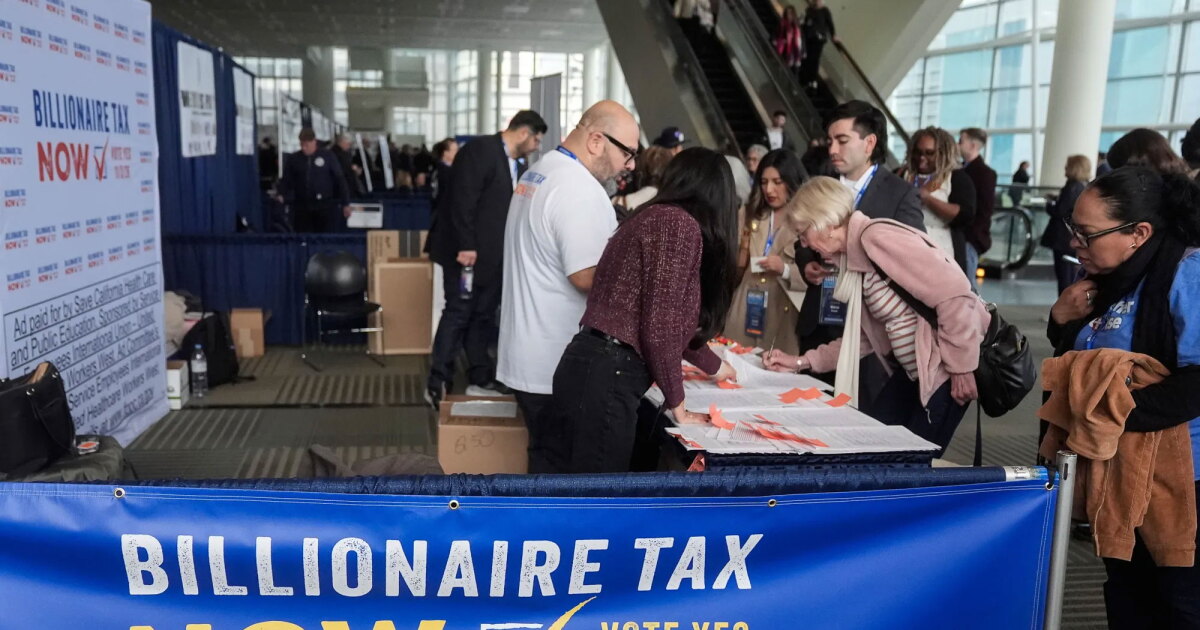
California’s November 2026 ballot includes Proposition 40, a one-time 5% tax on people worth more than $1 billion who were California residents on Jan. 1, 2026, with most proceeds intended for health care and some for education. Support is uncertain: a September UC Berkeley–POLITICO poll found 45% of registered voters in favor and 43% opposed, while other polling found slim majorities backing Prop. 40 and Propositions 41 and 42, which are designed to block it; Prop. 40 takes effect only if it receives more votes than both countermeasures. Supporters say the tax would help fund public needs and offset federal health care cuts, while critics warn it could drive entrepreneurs and jobs out of California and erode the tax base. Opponents have spent more than $195 million against Prop. 40, compared with about $36 million spent by supporters, and Google co-founder Sergey Brin has contributed more than $100 million to the opposition. State fiscal analysis anticipates a possible ongoing decline of less than $1 billion a year in income-tax revenue from billionaires, while a separate estimate says Proposition 3 would make a temporary high-earner income-tax increase permanent, preserving $5 billion to $15 billion in annual state revenue.
Key Points
1
In the September UC Berkeley–POLITICO poll, 12% of respondents were undecided; of that group, 65% said they were likely to support Proposition 40 and 15% said they would oppose it. The poll also found that 83% of likely voters had heard about the measure.
2
The measure has prominent Democratic supporters, including Reps. Ro Khanna and Maxine Waters, but gubernatorial candidate Xavier Becerra opposes it, as does outgoing Gov. Gavin Newsom.
3
Because the Jan. 1, 2026 residency date had already passed when Proposition 40 qualified for the ballot, billionaires who left California afterward would still be subject to the proposed tax.
4
A Truthdig report identified 22 billionaire opponents whose combined wealth it said rose from $439.8 billion in January 2025 to $722.1 billion by September 2026—a gain of $282.6 billion, or more than 64%.
Sentiment
Mostly NegativeNEGATIVENEUTRALPOSITIVE
Publishers
21
Articles
21
Reach
42
A
AnonymousAuthor


