Deployment Strain Prompts Carrier Swap
USS George Washington Replaces Ailing Lincoln in Middle East Amid Crew Hardship Concerns
Key Points
Lincoln has had only two brief port calls in more than eight-and-a-half months, highlighting the prolonged and limited port visits that have characterized its deployment.
Sailors aboard Lincoln have reportedly attempted to jump overboard due to deployment strain, including at least one incident in which a sailor went over the side and was quickly rescued.
Senator Richard Blumenthal publicly pressed the Pentagon, citing shortages of basic supplies, water contamination, plumbing issues, and mail disruptions on Lincoln, calling for immediate action.
The George Washington Carrier Strike Group recently conducted a westbound transit through the Singapore Strait and was observed in the Strait of Malacca during its current patrol.
Washington has been operating in the South China Sea and recently completed a port call at Da Nang, Vietnam, reflecting ongoing Indo-Pacific presence ahead of its Middle East mission.
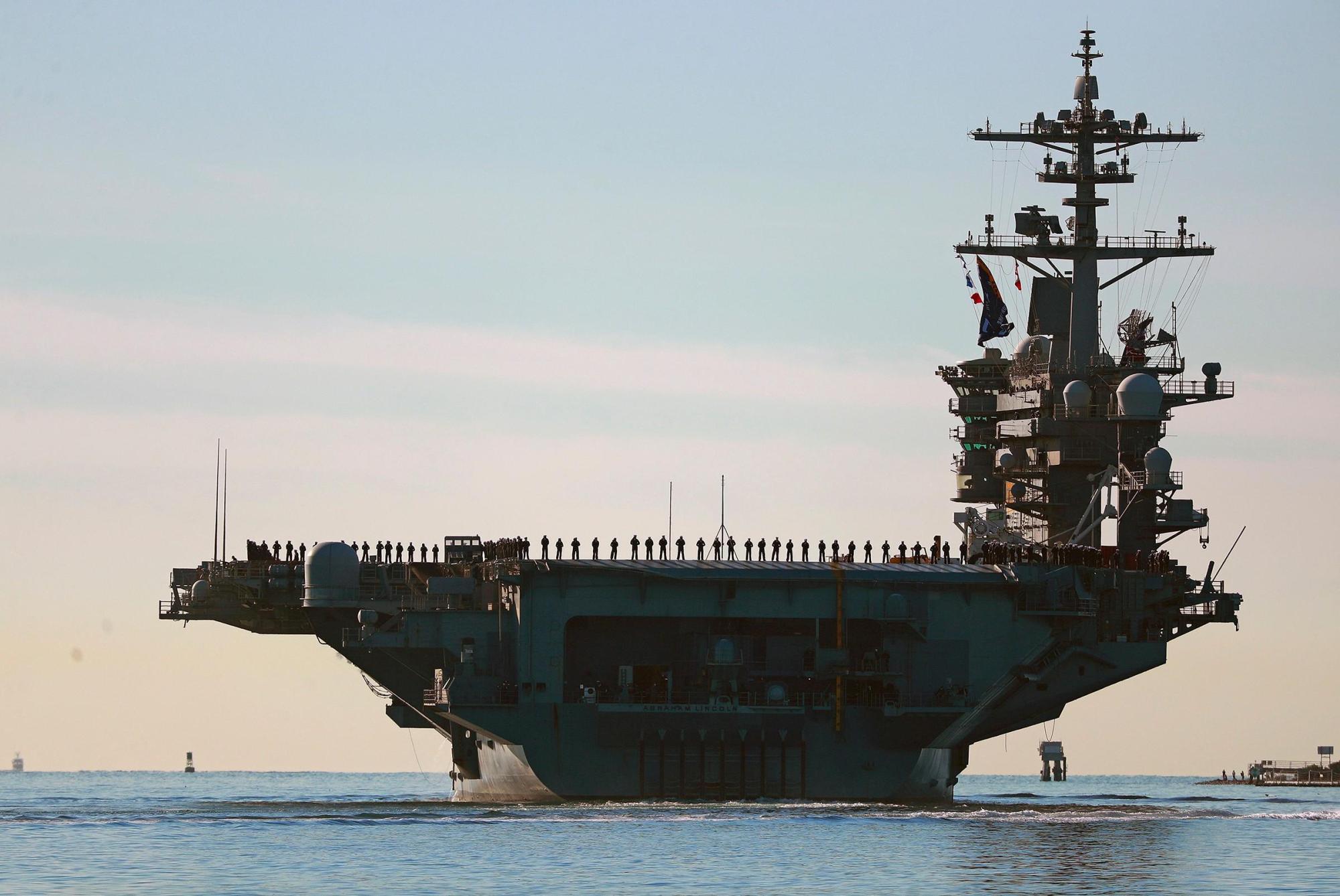
The USS George Washington is heading to the Middle East to relieve the USS Abraham Lincoln, which has spent more than 250 days at sea with almost no breaks, according to Press Democrat. The George Washington departed its home port in Yokosuka, Japan in May 2026 and is expected to reach the Arabian Sea within about a week.
The rotation comes after a wave of alarming reports about conditions aboard the Lincoln. Families of sailors have described food shortages, water contamination, plumbing failures, and serious mental-health strain, according to Delaware County Times.
Lincoln's Crew Has Endured Eight Brutal Months at Sea
The USS Abraham Lincoln has had only two brief port calls in more than eight and a half months at sea. That means sailors have gone nearly 200 days without a meaningful break on shore. Citizens Voice reported that the strain has pushed some crew members to a breaking point, with at least one sailor going overboard before being quickly rescued.
Families back home have raised loud alarms. Reports detail shortages of basic food and supplies, contaminated water, broken plumbing, and disrupted mail. These are not small inconveniences — they are signs of a ship stretched well past normal limits, EP Trail reported.
Senator Blumenthal Presses Pentagon Over Lincoln's Conditions
Senator Richard Blumenthal has publicly demanded answers from the Pentagon. He cited specific problems on the Lincoln, including shortages of basic supplies, water contamination, plumbing issues, and mail disruptions. He called for immediate action to address what sailors and their families are experiencing, according to Press Democrat.
Concern in Congress has been bipartisan. Lawmakers on both sides of the aisle have pressed the Defense Department to explain how a carrier deployment stretched this long — and with conditions this poor — was allowed to continue, Citizens Voice reported.
George Washington's Path From Japan Through the Indo-Pacific
The George Washington is the U.S. Navy's only carrier based permanently in Japan. Before turning toward the Middle East, it operated in the South China Sea and completed a port call in Da Nang, Vietnam. It then transited the Singapore Strait and was spotted in the Strait of Malacca — a key shipping chokepoint in Southeast Asia — on its westbound route, according to Middle East Monitor.
The transit underscores how quickly the Navy needs to move assets between the Indo-Pacific and the Middle East. Carrier strike groups must pass through narrow, strategically sensitive waterways to get from one region to the other, making timing and readiness critical.
Navy Aims to Keep Continuous Carrier Presence in the Region
The goal of the rotation is to keep U.S. naval power in the Middle East without interruption. The George Washington will take over from the Lincoln, allowing Lincoln's crew — exhausted after more than eight months at sea — to finally head home, Delaware County Times reported.
Maintaining a carrier in the region signals U.S. readiness and deters potential threats. But the Lincoln's deployment has shown the real cost of that commitment — on the ships, and on the people who serve aboard them. Whether the Navy adjusts its rotation policies after this episode remains to be seen.
Sentiment
Mostly NegativePublishers
27
Articles
104
Reach
131


