Geopolitics Roil Markets
US-Iran Hostilities Send Oil Soaring, Global Markets and Tech Stocks Retreat
Anonymous
Key Points
1
Iran's Revolutionary Guards said the Strait of Hormuz would be closed until further notice and until the end of American interventions in the region, while U.S. Central Command countered that the strait remains open to all vessels seeking to lawfully transit.
2
Kpler shipping data cited in reports show only six vessels crossed the Strait of Hormuz on Sunday, the lowest in five weeks, with exits including the very large crude carrier Humanity and the tanker Capetan Andreas, and three empty tankers entering the Gulf to load oil.
3
South Korea’s SK Hynix had a strong Nasdaq debut last Friday (up about 13%), but the stock later slumped more than 15% in Seoul as investors took profits after AI-driven gains; the company had raised roughly $26.5 billion via American depositary shares priced around $149 each.
4
Oil prices surged, with Brent crude briefly up nearly 5% to around $79 a barrel and U.S. crude rising as well, while U.S. stock futures were mixed (S&P 500 futures down about 0.3% and Nasdaq futures down around 0.9%), underscoring energy-market sensitivity to Gulf tensions.
Oil prices surged nearly 5% on Monday after the U.S. and Iran traded airstrikes, pushing Brent crude briefly to around $79 a barrel. Iran's Revolutionary Guards declared the Strait of Hormuz closed until American forces leave the region, rattling global energy markets and sending shockwaves through Asian stock exchanges. BNN Bloomberg reported world shares were mixed as traders scrambled to assess the damage.
Shipping data from Kpler showed only six vessels crossed the Strait of Hormuz on Sunday — the lowest in five weeks. Three of those were empty tankers entering the Gulf to pick up oil. The very large crude carrier Humanity and the tanker Capetan Andreas were among the exits, according to CP24.
Strait of Hormuz Closure Sends Oil Prices Soaring
Iran's Revolutionary Guards said the strait would stay shut until the U.S. ends its military presence in the region. U.S. Central Command pushed back, saying the waterway "remains open to all vessels seeking to lawfully transit." The standoff left energy traders deeply uneasy. About 20% of the world's seaborne oil passes through the strait each day.
Brent crude climbed nearly 5% to around $79 a barrel. U.S. crude rose in tandem. Newsmax noted that S&P 500 futures slipped about 0.3% and Nasdaq futures fell roughly 0.9%, showing how quickly oil fears spilled into broader markets. Analysts warned that any prolonged closure could choke global supply and stoke inflation.
Asian Markets Tumble as Geopolitical Risk Returns
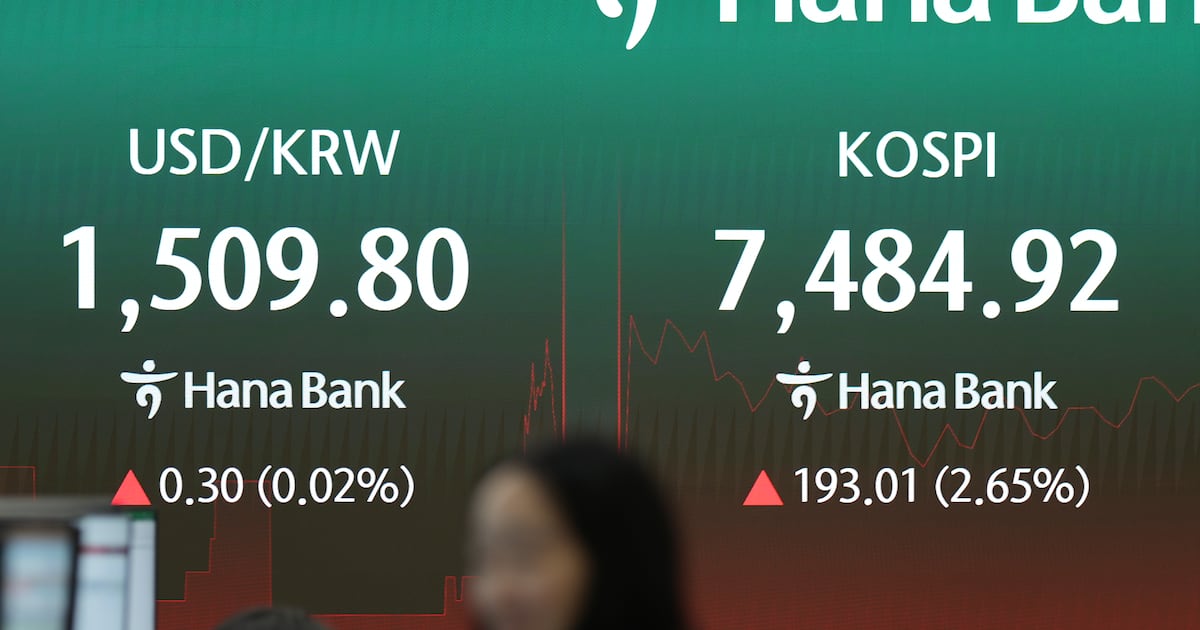
South Korea's Kospi fell sharply as investors dumped tech stocks. Samsung Electronics and SK Hynix both retreated. The sell-off came after weeks of AI-driven gains that had pushed chipmaker valuations to stretched levels. Profit-taking mixed with Middle East fear proved to be a powerful combination.
SK Hynix had just made a strong Nasdaq debut the Friday before, jumping about 13%. The company raised roughly $26.5 billion by pricing American depositary shares at around $149 each. But the celebration was short-lived. Back in Seoul, the stock slumped more than 15% as traders locked in gains and braced for uncertainty, according to AJC.
European Stocks Hold Steady While Wall Street Wavers
European markets were calmer. Germany's DAX added 0.2% to 25,105.55. France's CAC 40 edged 0.1% higher. GM Today reported that investors in Europe were watching the conflict closely but had not yet panicked. The modest gains suggested some traders still saw stability in Western markets despite the Gulf turmoil.
U.S. stock futures told a different story. The Nasdaq futures drop of roughly 0.9% reflected real worry about tech stocks tied to AI spending. If oil stays high, companies face higher costs. That squeezes profits and makes expensive growth stocks harder to justify.
AI Optimism Cools as Geopolitical Risk Takes Over
For months, chipmakers like SK Hynix and Samsung rode a wave of AI excitement. Demand for memory chips surged as data centers expanded. Investors poured money into anything tied to artificial intelligence — the technology that powers tools like ChatGPT. That enthusiasm pushed valuations high and left little room for bad news.
Now the bad news has arrived. Renewed conflict in the Middle East reminded investors that the real world can disrupt even the hottest tech stories. Profit-taking accelerated the declines. Analysts say the pullback does not mean AI demand is gone — but it does mean markets will be more cautious about pricing in future gains while shipping lanes and oil prices stay unstable, BNN Bloomberg noted.
Sentiment
Mostly NegativeNEGATIVENEUTRALPOSITIVE
Publishers
20
Articles
205
Reach
225
A
AnonymousAuthor


