Robótica impresa en 3D
Un nuevo elastómero desarrollado con inteligencia artificial crea manos robóticas versátiles
Anonymous
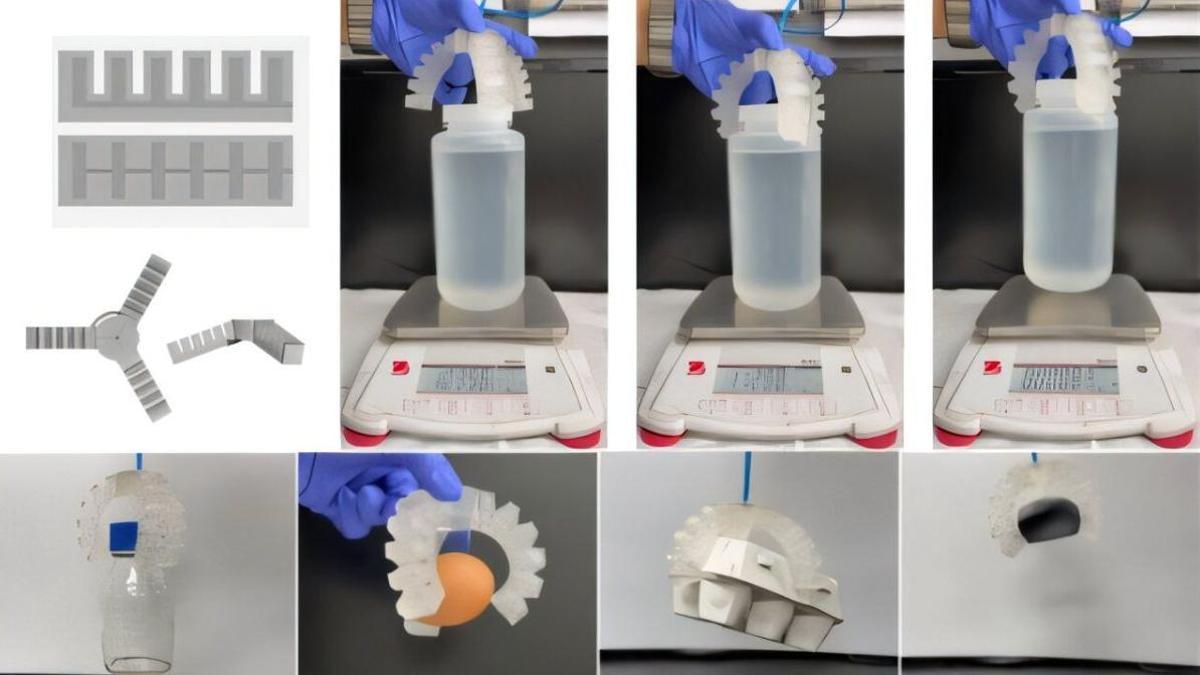
Scientists have created a 3D-printed robotic hand that can grab a raw egg without cracking it or lift a one-liter bottle without dropping it. La Provincia reports that the breakthrough uses a new AI-designed elastomer material that combines flexibility with strength. The artificial fingers use pneumatic actuators — air-powered motors — that bend and adapt to whatever object they touch.
A New Material Designed by Artificial Intelligence
The key to this robotic hand is the elastomer — a rubber-like plastic that stretches easily but resists tearing. Scientists used artificial intelligence to design this material from scratch. The AI tested thousands of combinations until it found one with the right balance of flexibility and durability. El Periódico de Extremadura explains that this special elastomer allows the hand to adapt its grip to delicate or heavy objects.
How 3D Printing Makes Robot Hands Affordable
Building robot hands used to require expensive metal parts and precise manufacturing. Now, researchers can print the entire hand using 3D printing technology. Diario de Mallorca notes that this approach cuts costs dramatically. The printed material with the new elastomer can be produced quickly and customized for different tasks. This makes robotic hands more accessible for factories, hospitals, and research labs.
Testing Grip Strength on Fragile and Heavy Objects
The robotic hand has proven itself in demanding tests. It successfully grabbed a raw egg — one of the hardest grips to control because the shell cracks easily under pressure. It also lifted a full one-liter bottle without letting it slip. El Periódico Mediterráneo reports that these tests show the hand can switch between ultra-gentle and powerful grips instantly. This flexibility makes it ideal for warehouse work, assembly lines, and healthcare settings where robots handle both delicate and heavy items.
Real-World Uses for Adaptive Robotic Hands
Factories struggle with tasks that require precision touch. Picking fruit, packing fragile goods, or assembling electronics all demand careful control. Información highlights how this robotic hand could solve that problem. The same device can work on an assembly line one moment and handle delicate medical tasks the next. As robots become more versatile, they can replace humans in dangerous or repetitive jobs while keeping products safe.
Sentiment
NeutralNEGATIVENEUTRALPOSITIVE
Publishers
12
Articles
0
Reach
12
A
AnonymousAuthor


