Domestic Rare Earths Boost
Idaho Strategic Resources finds significant rare earth elements, including yttrium, at Diamond Creek project, boosting domestic supply
Anonymous
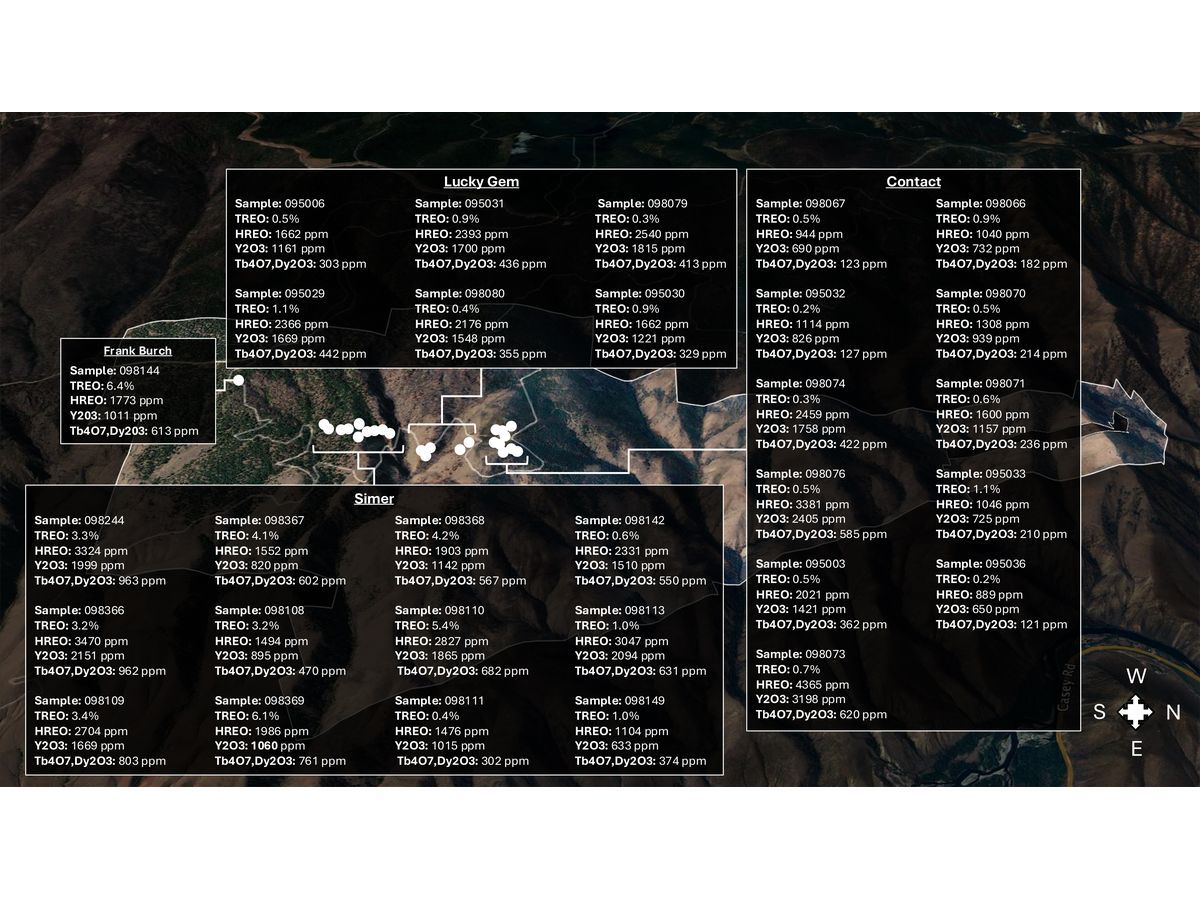
Idaho Strategic Resources (ISR) has found significant concentrations of heavy rare earth elements at its Diamond Creek project in Idaho, including yttrium levels that could make the site a valuable domestic source. Surface sampling across four prospects — Contact, Lucky Gem, Simer, and Frank Burch — averaged approximately 1.8% total rare earth oxides (TREO), according to Financial Post.
The results come as the U.S. races to build domestic supply chains for critical minerals. China has recently threatened to reinstate export controls on rare earth elements, which are used in everything from electric vehicles to military hardware. ISR's Idaho find could offer an early-stage pathway to reduce that dependence.
Yttrium Levels Stand Out Among the Results
Heavy rare earth oxides at Diamond Creek averaged more than 2,000 parts per million (ppm) across the four prospects, according to Montreal Gazette. That includes over 1,300 ppm of yttrium — a silvery metal used in LEDs, lasers, and cancer treatment drugs. Yttrium is hard to source outside of China, making domestic deposits especially attractive.
ISR says yttrium concentrations at Diamond Creek frequently fall in the 800 to 2,000 ppm range. The company described yttrium as a "potential high-value product" at the site. That language signals the company sees it not just as a byproduct, but as a primary revenue driver, Hannah Herald reported.
Four Prospects Spread Across a 3.2-Kilometer Lineament
The mineralization runs along a 3.2-kilometer geological lineament — essentially a linear zone where rock formations align and concentrate minerals. ISR identified rare earth deposits at all four surface prospects along this corridor. That kind of consistent spread suggests the deposit could be large enough to support commercial extraction.
The Lucky Gem prospect is drawing particular attention. ISR plans to evaluate it for a bulk sample — a larger-scale test that would help determine whether the ore can be processed economically. A bulk sample is typically one of the last steps before a company moves toward a mine feasibility study, Pembroke Observer reported.
China's Export Threats Push U.S. to Find Local Sources
The timing of ISR's announcement matters. China controls roughly 85% of global rare earth processing. Beijing has signaled it could restore dual-use export controls on rare earths — restrictions that would limit shipments of materials with both civilian and military uses. That threat has pushed U.S. policymakers to mandate more domestic sourcing, according to Financial Post.
ISR's Diamond Creek project sits in a favorable position to benefit from that policy shift. Idaho is a stable mining jurisdiction, and the deposit's heavy rare earth profile — which is harder to find than lighter rare earths — makes it more strategically valuable. Heavy rare earths like yttrium and dysprosium are critical for advanced defense systems.
ISR Plans More Fieldwork at Diamond Creek in 2026
ISR says it will return to Diamond Creek in 2026 for additional exploration fieldwork. The company wants to better map the extent of the deposit before committing to larger development costs. More drilling and sampling will help determine whether the 3.2-kilometer lineament holds consistent grades at depth, according to Montreal Gazette.
The Lucky Gem bulk sample evaluation will also move forward alongside that fieldwork. If results confirm economic viability, Diamond Creek could become one of the few U.S. heavy rare earth projects with a credible path to production — a rare thing in a sector where most domestic projects remain stuck at the exploration stage, Pembroke Observer noted.
Sentiment
NeutralNEGATIVENEUTRALPOSITIVE
Publishers
5
Articles
5
Reach
5
A
AnonymousAuthor


