Pets First
New AICPA Survey Reveals Americans Prioritize Pet Care, Even Cutting Personal Spending First
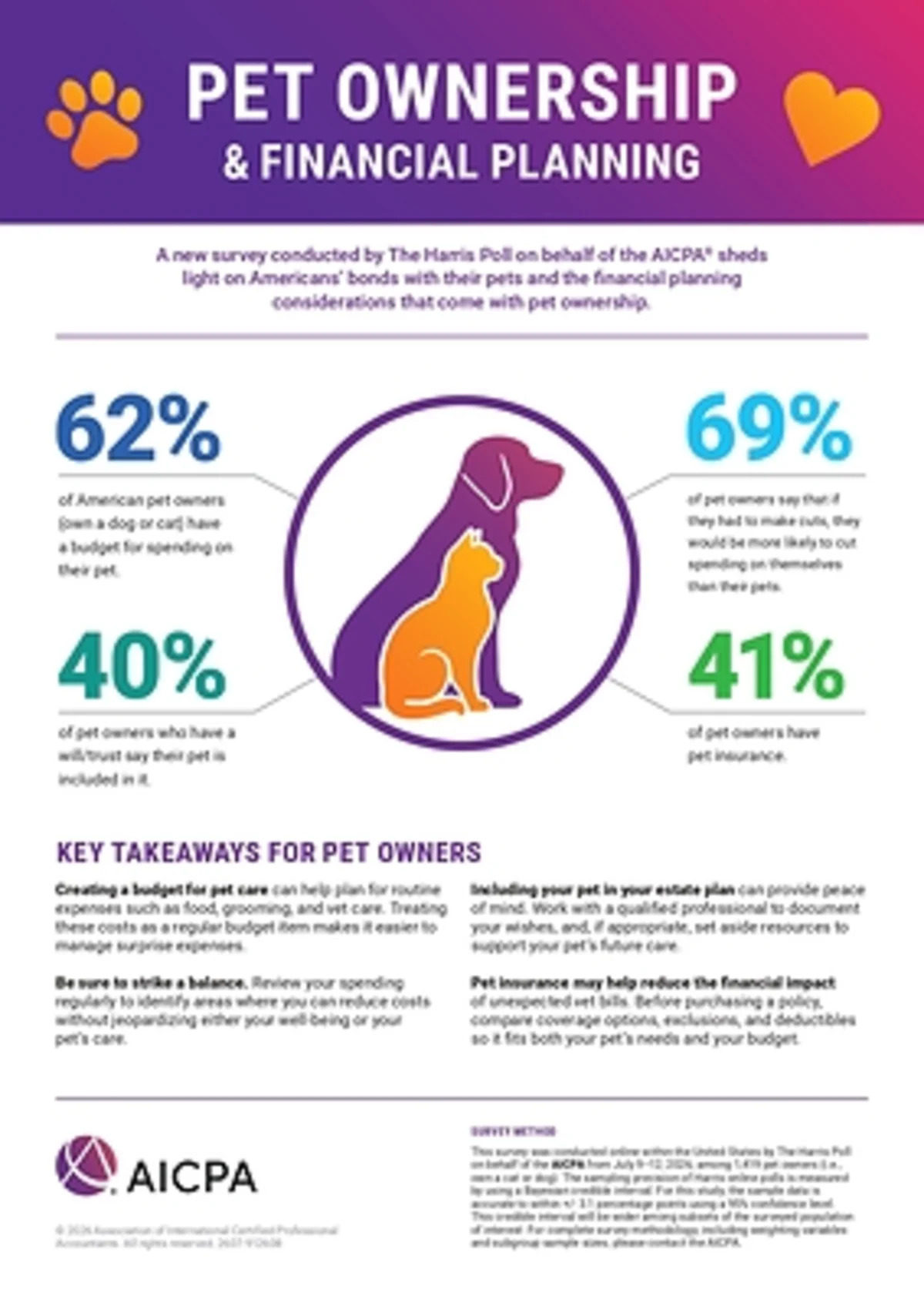
Americans love their pets — and their wallets prove it. A new survey by The Harris Poll, conducted on behalf of the AICPA, found that 69% of pet owners would cut their own spending before cutting their pet's budget. The average pet-owning household spends about $1,515 per year on their animals, according to PR Newswire.
The findings go beyond food and vet bills. Pet owners are now writing their animals into legal documents. According to AP News, 40% of pet owners who have a will or trust have already included provisions for their pet.
Pets Come Before Personal Spending for Most Owners
The survey makes one thing clear: pets rank above personal comfort in American households. Nearly 7 in 10 pet owners said they would cut spending on themselves first. That means less dining out, fewer new clothes, or skipped vacations — all to keep their pet healthy and happy, according to Yahoo Finance.
This is not just emotional. It reflects a real shift in how people think about pets. Many owners now treat them as full family members, not just animals. That mindset is driving bigger budgets and bigger financial decisions around pet care.
Pet Provisions Are Showing Up in Wills and Trusts
Estate planning used to be about people and property. Now pets are part of the conversation. The AICPA survey found that 40% of pet owners with a will or trust have added pet provisions, according to AP News. These clauses typically name a caregiver and set aside money for the animal's future care.
Financial planners say this trend is growing fast. As veterinary costs rise and pets live longer, owners want peace of mind. A pet provision in a will helps make sure the animal is cared for — even if the owner can no longer do it themselves.
Pet Insurance Costs and Coverage Vary Widely
Pet insurance is becoming more common, but shoppers need to read the fine print. The AICPA warns that policies vary widely in coverage and exclusions. Some plans cover accidents and illness. Others exclude pre-existing conditions or certain breeds. According to PR Newswire, owners should compare plans carefully before signing up.
With the average household spending $1,515 a year on pets, a single emergency vet visit can blow that budget fast. Insurance can help — but only if the policy actually covers what the pet needs. The AICPA advises owners to treat pet insurance like any other financial product: shop around and ask questions.
CPAs Say Pet Costs Deserve a Spot in Your Budget
The AICPA is using these findings to push a simple message: plan ahead. Pet costs are real, ongoing expenses. They should be part of every household budget — not an afterthought. The organization recommends tracking pet spending the same way you would track rent or groceries, according to AP News.
Long-term planning matters too. That means saving for unexpected vet bills, looking into pet insurance, and updating your will to include your pet. As Yahoo Finance reported, Americans are already moving in this direction — and financial professionals say it is a smart step for any pet-owning household.
Sentiment
NeutralPublishers
4
Articles
3
Reach
4


