UK AI Job Growth
Lanarkshire Secures £300 Million AI Investment, Projecting Thousands of New Jobs
Key Points
Lanarkshire's AI Growth Zone will deliver more than 3,400 new jobs and attract private investment of over £8 billion, with DataVita expanding its DV1 data centre and a second facility. Dell Technologies will establish a base at Mercury House in Lanarkshire's AI Innovation Park.
In the West Midlands, 53% of firms say that those failing to adopt AI in the next three years will be at a competitive disadvantage, while 67% of AI-using firms report that AI has created new jobs.
In the South East, investment in AI upskilling is rising: 56% of firms plan to increase AI training spend, with 34% expecting to spend £25,000–£100,000 and 28% £100,000–£250,000 in the coming year; about half of AI-using firms say AI created jobs.
Yorkshire and Humber: 19% of AI-using firms say their workforce currently lacks the necessary AI skills, while 65% say AI created jobs and 55% plan to invest in AI skills; barriers include cost and access to skills (around 22%) and a lack of understanding (18%).
Scotland's North Lanarkshire has secured a £300 million investment package to launch its AI Growth Zone, with Dell Technologies set to establish a new Scottish base there. Innovation News Network reports the development is expected to create more than 3,400 jobs and draw over £8 billion in private investment.
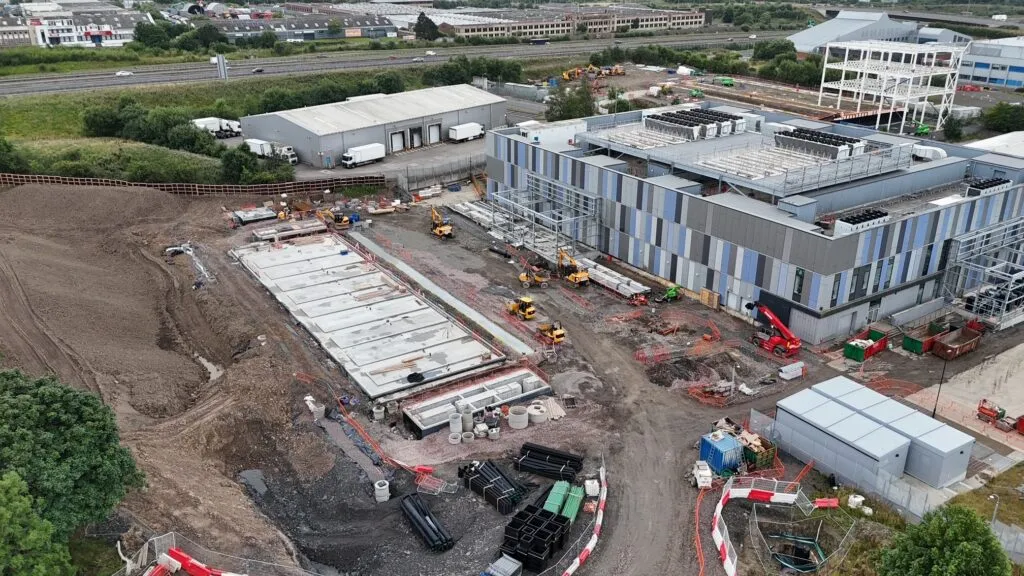
The National Wealth Fund is backing DataVita's plan to expand its DV1 data centre and build a second facility, according to Property Week. Dell will set up at Mercury House inside Lanarkshire's AI Innovation Park, anchoring what the government hopes will become a major hub for AI infrastructure in the UK.
DataVita and Dell Drive Lanarkshire's Data Centre Boom
The £300 million financing package was raised from a syndicate of lenders, with the National Wealth Fund providing the guarantee. Wired Gov reports that DataVita will use the funding to expand its existing DV1 data centre and add a second site. The move is designed to give Scotland a serious foothold in the fast-growing AI infrastructure market.
Dell Technologies choosing North Lanarkshire as its new Scottish base adds further weight to the zone's ambitions. The company will operate from Mercury House in the AI Innovation Park. Together, these moves signal that major tech firms see Lanarkshire as a credible location for long-term AI investment.
UK Firms Say AI Is Already Creating New Jobs
Across the UK, 54% of companies say AI has created new jobs, according to Lloyds' Business Barometer survey reported by Bloomberg. Some 21% of UK firms now employ dedicated AI specialists. And 58% plan to increase spending on AI skills in the coming year.
The West Midlands shows a similar picture. Greater Birmingham Chambers reports that 67% of AI-using firms in the region say AI has already created new jobs. Meanwhile, 53% of all West Midlands firms warn that businesses failing to adopt AI within three years will fall behind competitors. Some 61% plan to upskill their staff.
South East and Yorkshire Firms Plan Big Upskilling Spend
In the South East, about half of AI-using firms say AI has created jobs. Investment in training is rising fast. Some 56% of firms plan to increase AI training spend this year. Of those, 34% expect to spend between £25,000 and £100,000, and 28% plan to spend between £100,000 and £250,000.
Yorkshire and Humber tells a similar story. Some 65% of AI-using firms there say AI has created jobs, and 55% plan to invest in AI skills. But barriers remain. Around 22% of firms cite cost and access to skills as a problem. Another 18% say they simply lack the understanding to get started. Some 19% of AI-using Yorkshire firms admit their workforce currently lacks the AI skills needed.
Skills Gaps and Security Fears Slow Wider AI Adoption
Despite the job creation headlines, real obstacles persist. Across regions, firms flag cost, security risks, and talent shortages as the top reasons holding back AI adoption. These are not small concerns. For many smaller businesses, a training bill of £100,000 or more is out of reach without outside support.
The Lanarkshire AI Growth Zone is partly a response to these gaps. By clustering data infrastructure, big-name tenants like Dell, and government-backed financing in one place, the aim is to create a pipeline of skilled workers and attract further private cash. If the £8 billion investment target is met, it would rank among the largest AI-linked commitments in UK regional history.
Sentiment
Mostly PositivePublishers
12
Articles
10
Reach
22


