Trane & Eaton Power AI
Trane and Eaton Launch Joint AI Data Center Power-Cooling Solution, Boosting Efficiency and Speed
Key Points
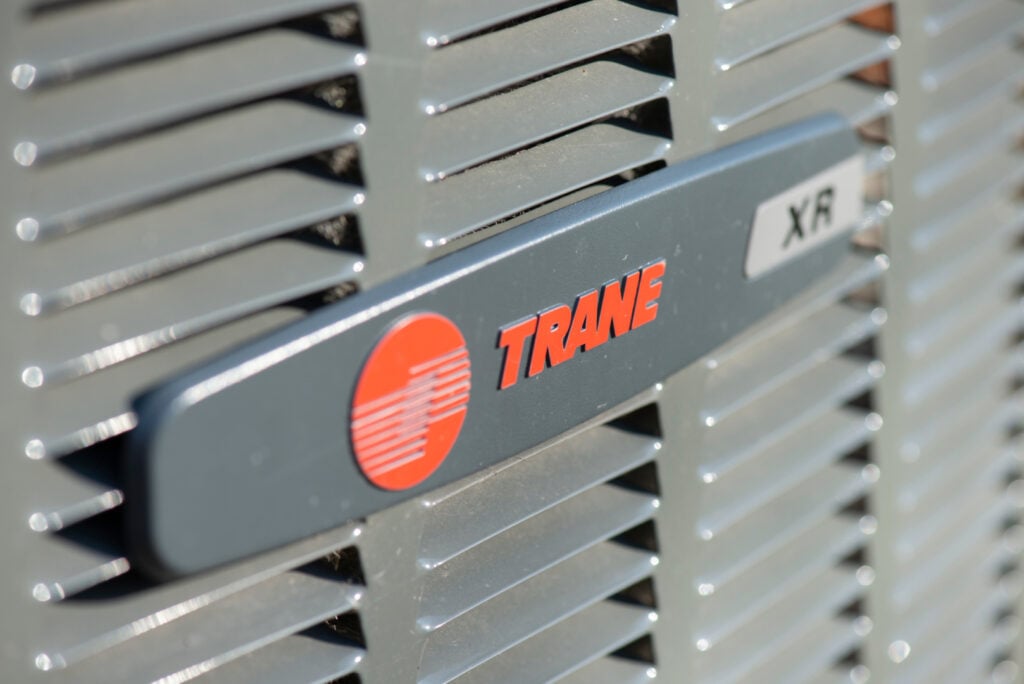
Trane’s cooling capability includes coolant distribution units rated to handle up to 14 MW of liquid cooling capacity, enabling higher density AI data centers.
The collaboration emphasizes high‑voltage direct current (HVDC) power infrastructure, which reduces conversion losses that occur when AC is stepped down for server chips.
NVIDIA’s Omniverse digital-twin collaboration with Trane has already yielded about a 10% improvement in thermal performance for AI workloads.
Eaton expanded its liquid cooling portfolio through the acquisition of Boyd Thermal for $9.5 billion to bolster its thermal solutions.
The joint reference design is embedded in both the Trane Continuum Rubin DSX and Eaton Beam Rubin DSX platforms and is designed to align with NVIDIA DSX and Omniverse DSX Blueprint, with adaptability to future liquid cooling technologies and DC architectures.
Trane Technologies and Eaton Corporation have jointly unveiled a first-of-its-kind power-and-cooling reference design built for AI data centers, promising up to 15% better energy efficiency and up to 30% lower installation costs versus traditional setups, according to Benzinga. The design plugs directly into Nvidia's DSX AI Factory platform, combining Trane's liquid cooling hardware with Eaton's high-voltage direct current power infrastructure.
The announcement comes as AI data centers face surging power demands that older low-voltage electrical systems struggle to meet. IT Brief reported that the joint design targets higher power density and faster deployment timelines for what the industry calls "AI factories" — large-scale facilities dedicated to running AI workloads.
How the Joint Reference Design Actually Works
At the core of the design is high-voltage direct current, or HVDC, power delivery. Standard data centers convert AC power down to lower voltages several times before it reaches a chip. Each conversion wastes energy as heat. HVDC skips most of those steps, cutting losses and improving efficiency, IT Brief Asia explained.
On the cooling side, Trane contributes coolant distribution units rated to handle up to 14 megawatts of liquid cooling capacity. That figure matters because the latest AI chips from Nvidia generate enormous heat — far more than air cooling alone can handle. The reference design is embedded in both the Trane Continuum Rubin DSX and Eaton Beam Rubin DSX platforms, according to IT Brief UK.
Nvidia Partnership Drives Real-World Efficiency Gains
Trane already works closely with Nvidia on digital-twin technology through Nvidia's Omniverse platform. A digital twin is a virtual copy of a data center that engineers use to test changes before making them in the real world. That collaboration has already produced about a 10% improvement in thermal performance for AI workloads, Benzinga noted.
The new joint design aligns with both the Nvidia DSX and Omniverse DSX Blueprint standards. That alignment means it can adapt to future liquid cooling technologies and new DC power architectures as Nvidia's hardware roadmap evolves. Companies building AI factories today can essentially future-proof their infrastructure.
Both Companies Spent Heavily to Get Here
Neither Trane nor Eaton arrived at this collaboration empty-handed. Trane expanded its cooling portfolio through the acquisition of LiquidStack, a specialist in immersion cooling. Eaton went further, acquiring Boyd Thermal — a deal valued at $9.5 billion — to bolster its liquid cooling and thermal solutions, according to Seeking Alpha.
Those acquisitions gave both companies the hardware depth needed to build a credible end-to-end solution. Rather than forcing data center operators to stitch together products from multiple vendors, the joint design offers a single, tested architecture. The goal is to cut the complexity and time it takes to stand up an AI factory.
Wall Street Sees This as a Long-Term Revenue Driver
Financial analysts have taken notice. Seeking Alpha reported that Trane's project backlog is improving, and observers are growing optimistic about the company's ability to turn AI-factory demand into sustained revenue. Trane's stock trades on the NYSE under the ticker TT, while Eaton trades as ETN.
The broader bet is that AI infrastructure spending is still in early innings. Medium-voltage architectures with up to 80% less copper wiring than traditional setups mean lower material costs at massive scale. For hyperscale buyers planning gigawatt-level campuses, those savings compound fast. Benzinga noted the collaboration positions both companies squarely inside the Nvidia AI data center ecosystem.
Sentiment
Mostly PositivePublishers
11
Articles
23
Reach
34


