Voyager Boosts Lunar Exploration
Voyager acquires Astrobotic, creating Voyager Lunar Systems to accelerate U.S. Moon missions
Key Points
Voyager's financial outlook shows notable distress signals: GF Score of 10/100 and an Altman Z-score of 1.44, suggesting elevated bankruptcy risk in the near term.
NASA awarded Astrobotic two Peregrine lander missions totaling about $298 million for launches in 2028, with each lander carrying an identical set of three NASA payloads.
John Thornton, Astrobotic’s longtime chief executive, will continue to lead Voyager Lunar Systems after the acquisition, providing continuity of leadership for the lunar initiative.
Griffin-1, shipped to NASA’s Jet Propulsion Laboratory for environmental testing, is slated to deliver Astrolab’s FLIP rover to the Moon along with several smaller payloads.
NASA’s Ignition initiative under the Commercial Lunar Payload Services program includes the CS-8 competitive procurement within CLPS, targeting up to 30 robotic lunar landings beginning in 2027, a broader push Voyager is positioned to participate in.
Voyager Technologies has completed its acquisition of Astrobotic Technology, rebranding the Pittsburgh-based company as Voyager Lunar Systems. The deal closed alongside a major win: NASA awarded the new subsidiary a $297.9 million contract for two robotic lunar lander missions, according to Yahoo Finance.
The transaction included $162 million in cash and stock and $9 million in assumed debt, plus up to $129 million in potential earnout payments tied to performance milestones, Seeking Alpha reported. Astrobotic's longtime CEO John Thornton will stay on to lead Voyager Lunar Systems.
NASA's $298 Million Contract Anchors the New Lunar Unit
NASA awarded Voyager Lunar Systems two Peregrine lander missions totaling about $298 million, according to MarketScreener. Each lander will carry an identical set of three NASA payloads to the Moon, with launches targeted for 2028. The contract was not part of Voyager's financial profile before the deal closed.
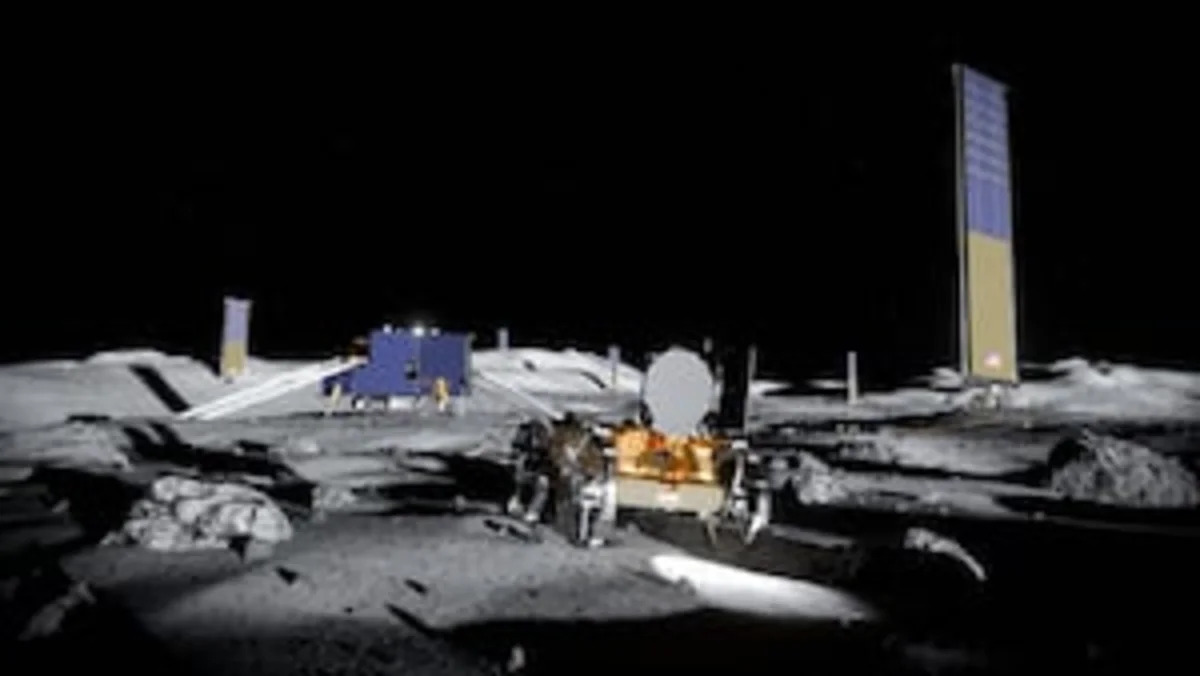
Griffin Mission One has already shipped to NASA's Jet Propulsion Laboratory for environmental testing. It is slated to deliver Astrolab's FLIP rover to the Moon, along with several smaller payloads. A 2028 launch window is being targeted for that mission as well.
Voyager Eyes 30 Moon Landings Through NASA's Ignition Push
Voyager is positioning itself inside NASA's Commercial Lunar Payload Services program, known as CLPS. The agency's Ignition initiative, part of a competitive procurement called CS-8, targets up to 30 robotic lunar landings beginning in 2027. Voyager Lunar Systems is set up to compete for those missions, Yahoo Finance reported.
Voyager CEO Dylan Taylor said the company is focused on accelerating American lunar capabilities. Plans include expanding Voyager Lunar Systems' Pittsburgh facilities and growing its workforce. The broader goal is to support NASA's Artemis-era crewed Moon missions with robotic infrastructure built in advance.
Financial Distress Signals Hang Over Voyager's Ambitions
Despite the strategic wins, Voyager's financial health raises red flags. GuruFocus noted the company carries a GF Score of just 10 out of 100. Its Altman Z-score sits at 1.44, a level that signals elevated near-term bankruptcy risk. Analysts view these numbers as a serious caution sign for investors.
The earnout structure of the Astrobotic deal adds more uncertainty. Up to $129 million in additional payments depend on hitting future performance milestones. If Voyager struggles financially, meeting those targets — and funding the lunar missions themselves — could prove difficult.
Astrobotic's Troubled Past Makes Continuity a Priority
Astrobotic's first mission, Peregrine Mission One, ended in failure in early 2024 after a propulsion system fault prevented a lunar landing. Keeping John Thornton in charge of Voyager Lunar Systems is a direct signal that Voyager wants to preserve institutional knowledge while fixing past problems, Yahoo Finance reported.
The two new Peregrine missions represent a chance at redemption. With $298 million in NASA backing and a clear launch timeline through 2028, Voyager Lunar Systems enters the next phase of the Moon race as one of America's most active commercial lunar contractors, according to MarketScreener.
Sentiment
Mostly PositivePublishers
10
Articles
17
Reach
27


