EU Rushes Aid for Belgium's Record Wildfire
EU Deploys Resources to Belgium as Record Wildfire Forces Evacuations Amid Heatwave
Key Points
A children’s summer camp in the region was evacuated as winds shifted and smoke intensified.
The village of Sourbrodt has about 500 residents and was under threat of evacuation due to the advancing fire.
The wildfire is located roughly 25 kilometres from the German border near Baelen, prompting cross-border firefighting assistance.
Belgium’s army was enlisted to supply firefighting vehicles from its air bases to support the EU-assisted operation.
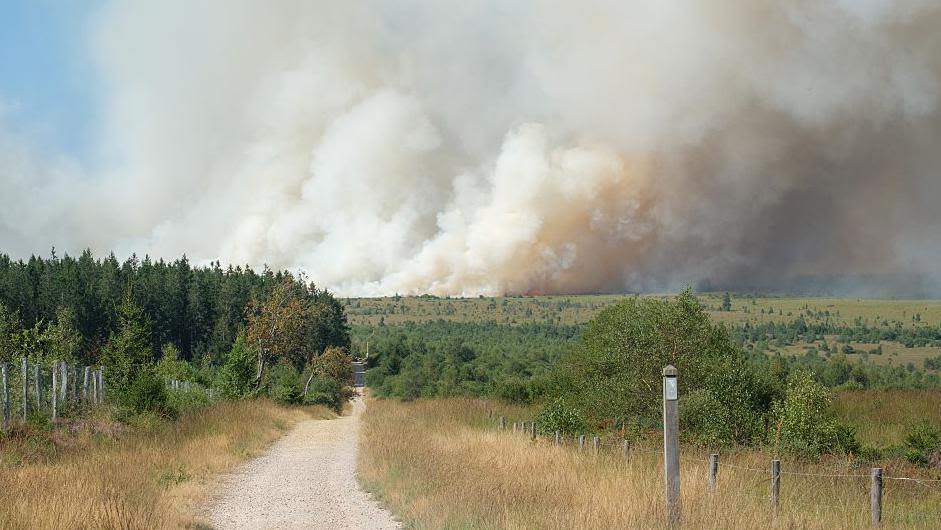
Video footage showed smokeColumns reaching nearly 300 metres above the treeline as the blaze widened.
A wildfire tearing through Belgium's largest nature reserve has become the biggest blaze in the country's recorded history. By Saturday afternoon, the fire had burned about 1,600 hectares of the High Fens, destroying roughly a third of the reserve, according to BBC. That surpasses the previous record set by a 2011 blaze.
The European Union mobilized three helicopters and two water-bombing aircraft to help Belgian crews contain the fire. Germany, the Czech Republic, Sweden, and the Netherlands all sent firefighting assets under the EU's Civil Protection Mechanism. Belgium's army also supplied firefighting vehicles from its air bases.
Fire Forces Evacuations as Smoke Columns Hit 300 Metres
The wildfire began burning on Friday near Baelen, about 25 kilometres from the German border. Authorities ordered evacuations in parts of two nearby municipalities. Tourists in the area were told to leave. Residents of Sourbrodt, a village of about 500 people, were told to prepare for possible evacuation as winds shifted and smoke intensified, BBC reported.
A children's summer camp in the region was also evacuated as conditions worsened. Video footage captured smoke columns rising nearly 300 metres above the treeline as the blaze widened. Local officials said the fire destroyed a third of the High Fens, Belgium's largest nature reserve, according to Yahoo News.
EU Crisis Response Brings Cross-Border Firefighting Teams
EU crisis commissioner Hadja Lahbib highlighted the bloc's rapid response protocol and ongoing cross-border cooperation. The EU Civil Protection Mechanism allowed neighboring countries to quickly send planes, helicopters, and ground crews. This kind of coordinated response is designed to move resources fast when one country's fire services are overwhelmed.
Belgian firefighters also managed to stop the blaze from spreading into a nearby fir forest, according to HiTechHub. That was a key victory. Fir forests burn faster and hotter than open moorland. Keeping the fire on open ground gave crews more room to work.
Europe's Fifth Heatwave of Summer Fuels Fire Danger
The wildfire struck during Europe's fifth heatwave of the summer. Dry, hot conditions across the continent have raised fire risk sharply. Scientists warn that climate change is making wildfires more frequent, more intense, and harder to contain. Belgium, not typically seen as a high fire-risk country, is now facing conditions once associated only with southern Europe.
The High Fens is a protected peat bog and moorland in eastern Belgium. Peat holds enormous amounts of carbon. When it burns, it releases that carbon into the atmosphere. That makes fires like this both an environmental emergency and a climate concern, far beyond the immediate damage to the reserve.
Belgium's Largest Nature Reserve Now Scarred for Years
The High Fens covers around 4,700 hectares in total. With 1,600 hectares burned, about one-third of it is gone. That is a significant loss for one of Belgium's most important natural areas. Recovery for peat bogs can take decades, according to conservation experts.
Local officials confirmed this fire is now the largest wildfire on record in Belgium, surpassing the 2011 blaze. The scale of the damage has prompted calls for a review of fire preparedness in a country that rarely faces this level of risk. For now, crews remain on the ground monitoring hot spots to prevent the fire from reigniting.
Sentiment
Mostly NegativePublishers
11
Articles
69
Reach
80


