American Airlines Cabin Overhaul
American Airlines Reintroduces Seatback Screens and Adds More Premium Seats Across Fleet
Key Points
American plans to install 24 first-class seats on Boeing 737 MAX 10s and on Airbus A321neos, up from the current cap of about 20, with additional first-class rows being added through retrofits on aircraft such as the A319s and A320s.
American already operates seatback TVs on more than 140 long-haul aircraft, underscoring the airline's broader premium-entertainment footprint beyond the narrow-body overhaul.
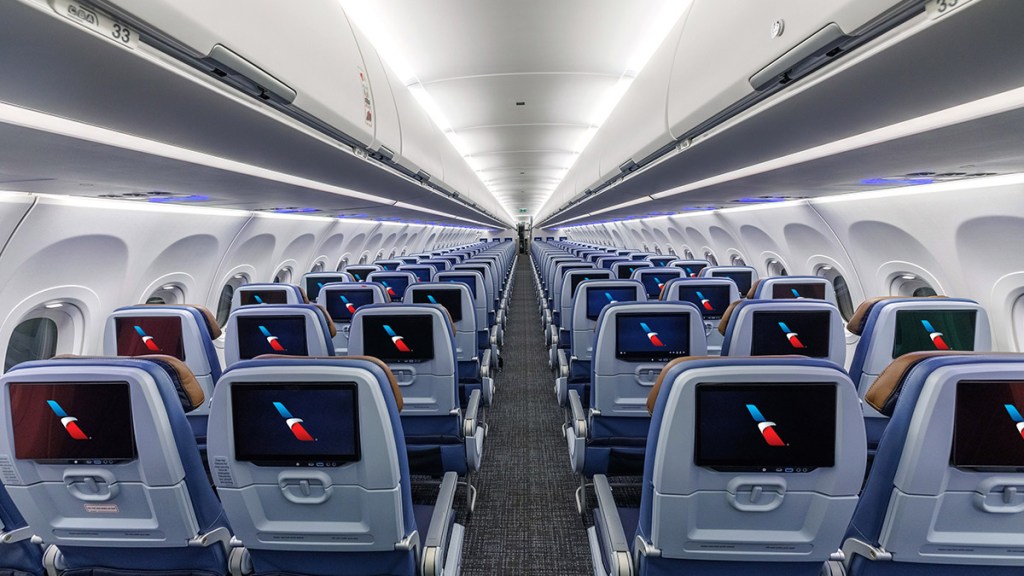
The new seatback screens will be among the largest on North American narrow-body aircraft and will use 4K technology to deliver enhanced picture quality, color, and clarity.
The in-flight entertainment platform will include interactive, enhanced flight maps with real-time destination information and insights, alongside personalized content recommendations.
Industry context shows a larger scale of seatback entertainment already in use by rivals: Delta has seatback screens on more than 900 aircraft and United on about 800, highlighting Delta/United’s premium-entertainment footprint.
American Airlines is bringing back seatback screens — and it is going big. The carrier plans to install in-flight entertainment screens across its entire narrow-body fleet, starting with new aircraft deliveries in 2028, according to Quartz. Retrofits on existing planes will also begin that year, with full fleet completion targeted for the early 2030s.
The move reverses a nearly decade-long strategy of asking passengers to use their own phones and tablets, according to Yahoo Finance. American also plans to raise the share of premium seats on narrow-body jets from roughly 25% today to about 40% — a sweeping cabin overhaul aimed at closing the profit gap with Delta and United.
Seatback Screens Return With 4K Displays and Bluetooth Audio
The new screens will be among the largest on any North American narrow-body aircraft, according to Airline Geeks. They will use 4K technology for sharper picture quality and include faster USB-C charging ports and Bluetooth audio support. Passengers will also get personalized content recommendations and interactive flight maps with real-time destination info.
American already runs seatback TVs on more than 140 long-haul aircraft, Quartz reported. But the narrow-body fleet — the planes used on most domestic routes — has gone without them for years. That gap left American trailing rivals in the eyes of many travelers.
More First-Class Rows Added to Key Aircraft Types
American plans to put 24 first-class seats on its Boeing 737 MAX 10s and Airbus A321neos, up from the current cap of about 20, according to Yahoo Travel. The airline will also retrofit older jets — including the A319s and A320s — to add extra first-class rows. More extra-legroom seats will be added across the fleet as well.
The goal is to reach about 40% premium seating on narrow-body jets fleet-wide. That is a major jump from the roughly 25% share today. American is betting that more premium seats mean more revenue on every flight.
American Trails Delta and United by Hundreds of Screen-Equipped Planes
The scale of American's catch-up job is clear in the numbers. Delta already has seatback screens on more than 900 aircraft. United has them on about 800, according to Airline Geeks. American's narrow-body fleet has had none. That gap has hurt the airline as travelers increasingly pick carriers based on comfort and entertainment.
Freedom 96.9 reported that American sees the cabin overhaul as a direct effort to narrow the profit gap with its two main rivals. The airline has lagged Delta and United on premium revenue for years. Executives believe better seats and better screens will bring higher-paying passengers back.
A Long Road to Full Fleet Completion by the Mid-2030s
The rollout will not happen overnight. New narrow-body deliveries will come with screens starting in 2028. Retrofits on existing planes begin the same year. But finishing the entire fleet will take until the early to mid-2030s, Quartz noted. That is a long timeline — and Delta and United will not be standing still in the meantime.
Still, industry observers call this a meaningful shift. For years, American asked flyers to stream entertainment on personal devices. Now it is spending to bring the screen back to the seat. The airline is signaling that the era of asking passengers to bring their own entertainment is over.
Sentiment
Mostly PositivePublishers
59
Articles
138
Reach
197