Saturn Decagon, Rubin Observatory Lead Astronomy Findings
Saturn Decagon, Rubin Observatory Lead Astronomy Findings
Anonymous
Key Points
1
Trevor Barry first noticed the unusual structure in July 2024 while monitoring Saturn from a self-built backyard observatory in Broken Hill.
2
The Rubin Observatory’s COSMOS observations build on more than two decades of research using leading telescopes across optical, radio, ultraviolet and X-ray wavelengths; the field serves as a benchmark for testing instruments and combining measurements.
3
NASA and SpaceX delayed Crew-13 after engineers detected an oxidizer leak in the Dragon spacecraft’s propulsion system during prelaunch preparations.
4
The Artemis II crew is set to receive the Congressional Space Medal of Honor after becoming the first humans in more than 50 years to travel beyond the Moon; their Orion mission lasted 10 days.
5
JWST observations indicate that massive early galaxies contain many more small, faint stars than expected, potentially making some of those galaxies three to four times more massive than previous estimates.
A former mine worker's backyard telescope in Broken Hill, Australia discovered a giant 10-sided wave structure around Saturn's south pole—the first decagon ever spotted on any solar system planet ABC News. The finding, published in Science Advances, shows how amateur astronomers using simple equipment can make world-class discoveries. Meanwhile, the Vera C. Rubin Observatory released its first deep-field images of the COSMOS region, revealing galaxies and cosmic structures in unprecedented detail Phys.org.
How a Backyard Observatory Spotted Saturn's Hidden Decagon
Trevor Barry, a former mining worker, built his own telescope in his Broken Hill backyard. In July 2024, while scanning Saturn's atmosphere, he spotted something astronomers had never seen before: a 10-sided polygon wave circling the planet's south pole ABC News. Professional telescopes had missed it because they don't watch the same patch of sky as often as dedicated amateur observers can.
Amateurs and professionals play different roles in astronomy. Backyard observers provide constant, focused monitoring that catches unexpected changes. Professional observatories like Rubin offer wider views and sharper details across the entire sky Phys.org. Together, they create a complete picture of how planets and galaxies behave.
Rubin Observatory Maps the Deepest Cosmic Field Yet
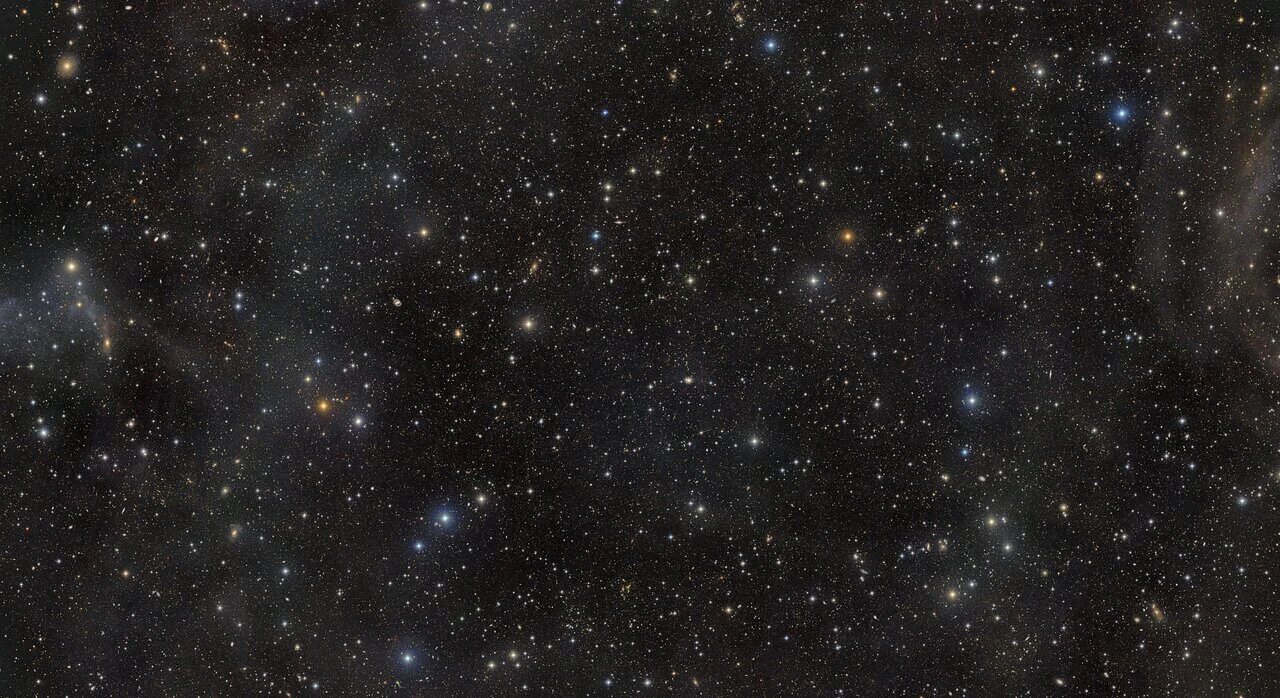
The Vera C. Rubin Observatory released its first science images from the COSMOS field, a small patch of sky in the constellation Sextans Phys.org. This region has been studied for over 20 years by radio telescopes, X-ray sensors, and ultraviolet instruments. Rubin's new data adds the sharpest optical view yet, letting astronomers combine observations from every type of light.
The COSMOS field serves as a testing ground for new telescopes. When astronomers aim a fresh instrument at this well-studied region, they can check their results against decades of prior data Phys.org. This year, JWST observations showed that early galaxies contain far more faint stars than expected—making some galaxies three to four times heavier than scientists thought.
Moving Space Observation Into Orbit
As telescopes collect more data, scientists face a challenge: how to process it fast enough Astronomer. One solution is building data centers in space. Orbiting computers could analyze observations near their source, cutting the time and bandwidth needed to send data to Earth.
But orbital computing faces big hurdles. Launch costs and maintenance are expensive. Heat and radiation in space damage electronics. Power and cooling systems must be ultra-reliable. Scientists are still weighing whether the speed gains justify the added complexity and cost Astronomer.
Edinburgh's Historic Observatory Preserves Centuries of Astronomy
The Royal Observatory of Edinburgh is digitizing and cataloging its 11,000-book collection—the UK's largest astronomy library Astrobites. The collection includes a handwritten manuscript by Galileo, the telescope's inventor. The massive preservation project happens as the observatory prepares for major renovations.
This library, built over centuries, holds records of how astronomy evolved from Galileo's era to today Astrobites. Digitizing it makes these rare documents accessible to researchers worldwide and protects them from aging and damage. The effort shows how modern institutions value and preserve the roots of science.
Sentiment
Mostly PositiveNEGATIVENEUTRALPOSITIVE
Publishers
13
Articles
7
Reach
20
A
AnonymousAuthor


