Saudi Oil Exports Rebound
Saudi Crude Exports Rebound to Six Million Barrels Daily Despite Pipeline Damage
Anonymous
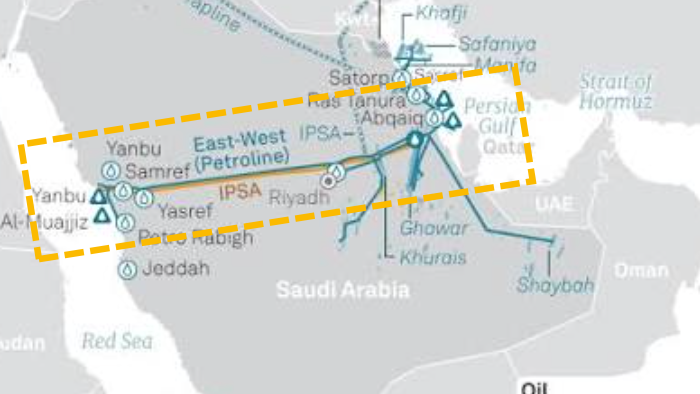
Saudi Arabia’s East-West Pipeline, damaged in a drone attack earlier this month, has restarted at low volumes and is gradually moving crude toward the Red Sea, but tanker loadings at Yanbu had not yet resumed according to industry sources. The pipeline is strategically important because it lets Saudi Arabia bypass the Strait of Hormuz, where the Iran war has disrupted shipping; a full return to its intended capacity of about 4 million barrels per day could take weeks. Despite the outage, Saudi crude exports have rebounded, with September shipments reported at about 6 million barrels per day as Riyadh has increasingly sent oil through Hormuz amid improved traffic and a U.S.-supported shipping lane. The pipeline’s restart helped ease market concerns, while the International Energy Agency said Saudi oil supply had fallen sharply in August amid attacks on energy facilities and lowered its 2026 supply outlook.
Key Points
1
September crude exports were nearly 80% above August’s 3.4 million barrels per day, returning to the monthly average for 2025, according to Kpler data.
2
The IEA attributed the August supply drop to attacks on several sites, including the Jazan refinery, shipping near Yanbu and the Abqaiq oil-processing facility, as well as attacks on ships transiting the Bab el-Mandeb.
3
The IEA’s estimate of Saudi supply in August—6 million barrels per day—was below the 7.122 million barrels per day Saudi Arabia reported supplying to OPEC; Saudi Arabia’s reported production was 6.238 million barrels per day.
4
Oil exports through the Strait of Hormuz had climbed to a seven-day average of 13.2 million barrels per day, still below the roughly 17 million barrels per day recorded before the war disrupted traffic.
Sentiment
Mostly NegativeNEGATIVENEUTRALPOSITIVE
Publishers
26
Articles
48
Reach
74
A
AnonymousAuthor


