Hormuz Shipping Under Attack
Iran Fires Missiles at Commercial Ships in Crucial Oil Corridor, Raising Market Risks
Anonymous
Key Points
1
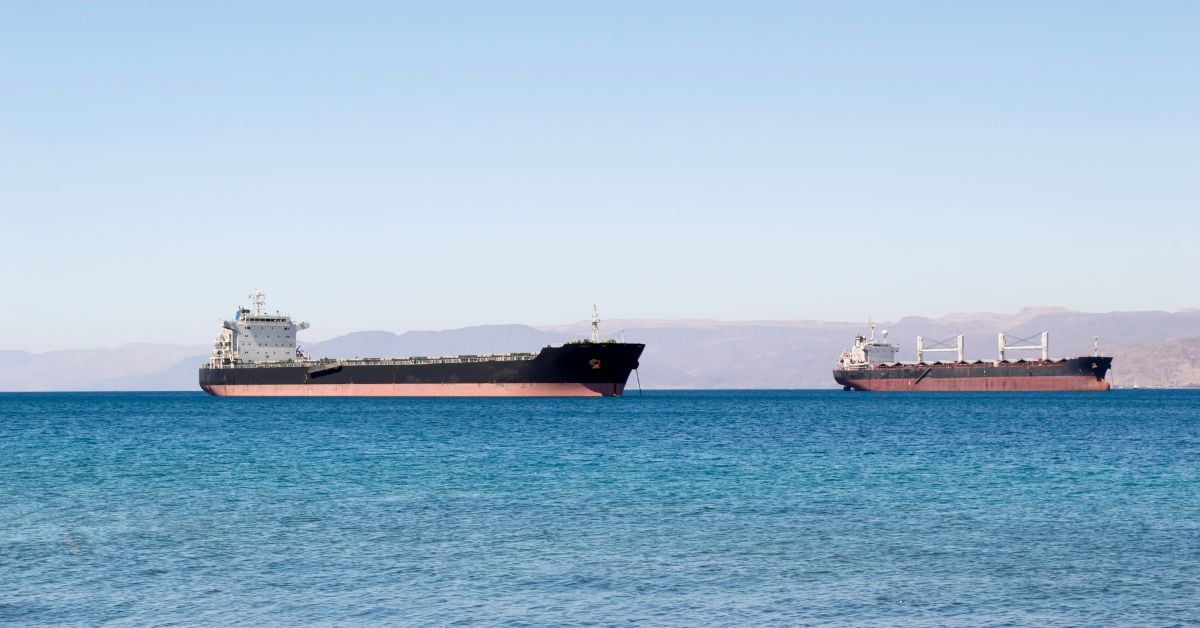
Al Rekayyat, a liquefied natural gas tanker owned by Nakilat, was struck on its port side near the Gulf of Oman as it transited the Strait of Hormuz, with reporting noting the vessel was hit at the top of the engine room.
2
The attacks are framed as testing a fragile ceasefire that has helped push oil prices down from April peaks, while Saudi exports have rebounded toward pre-war levels (about 34 million barrels exported since June 17).
3
Market signals reflect elevated risk: a July 7 sub-market priced in roughly a 91% probability of successful targeting, and Brent crude rose about 0.4% to around $72.25 a barrel following the reports.
4
Iranian state media claimed the tanker attack followed an attempt to transit via the southern Omani route with U.S. Navy support, asserting the vessel ignored repeated warnings.
5
Diplomacy remains fragile: indirect U.S.-Iran talks have faced headway challenges, though a 60-day interim peace framework is in place as talks continue toward a longer-term settlement, while wider regional issues including Gaza humanitarian concerns and Lebanon-Israel diplomacy persist.
Iran's Revolutionary Guards fired missiles and drones at multiple commercial ships near the Strait of Hormuz on July 6–7, 2026, striking at least three vessels and causing significant damage with no casualties reported, according to Insurance Journal and Marine Insight. The attacks shattered a fragile 60-day ceasefire that had already cut oil prices by roughly 30% from their April peaks, sending Brent crude up about 1.4% to between $73 and $74 a barrel.
The most serious strike hit the LNG tanker Al Rekayyat, a Qatari-owned vessel operated by Nakilat, at around 1:00 AM. The ship's captain sent out a distress call: "Mayday mayday mayday. We are being hit by drone on port side, top of engine room. Status: engine room fire and full of smoke," Semafor reported. A second ship, the Saudi crude tanker Wedyan, was hit roughly an hour later off the Omani coast.
IRGC Targets Ships on Southern Omani Route
The IRGC struck vessels using the southern corridor through Omani coastal waters — the route backed by the U.S. and its allies. Iran has insisted all ships use a northern route closer to its own shores. By attacking ships in the south, Tehran signaled it will not allow transits outside its direct control, according to Yahoo News.
Iranian state media claimed the ships were targeted after trying to transit "through the Omani route in the Strait of Hormuz with US Navy support" and ignoring repeated warnings. IRGC naval radio broadcasts warned ships on VHF Channel 16: "our missiles and drones are ready to fire at you." A third vessel was struck by a drone at 1:05 PM the same day, sustaining minor damage but continuing its voyage.
Qatar Condemns Attack on Its Own Tanker
Qatar occupies a deeply awkward position. It is actively hosting U.S.-Iran peace talks in Doha. Yet the Al Rekayyat is a Qatari state-owned vessel. Qatar's foreign ministry spokesperson Dr. Majed Al Ansari called the strike "an unacceptable attack on the security of international maritime navigation and a grave violation of international law." Qatar summoned Iran's deputy ambassador to hand over a formal protest note.
Security analysts called the move audacious. Striking Qatar — the very mediator brokering the ceasefire — suggests hardline IRGC factions may be trying to derail the peace process. Daily vessel transits through the strait collapsed from 25 on July 6 to just 7 by the end of July 7, according to shipping data firm Kpler.
Oil Prices Jump as Shipping Costs Soar
Oil markets reacted sharply. Brent crude spiked between 1.4% and 2% to $73–$74.29 a barrel. European natural gas prices surged 4.1% to 6% after the strike on Qatar's LNG tanker. A specialized maritime risk market had already priced in a 91% chance of a successful targeting event on July 7, Insurance Journal reported.
Freight costs exploded too. Charter rates to load a tanker inside the Persian Gulf jumped to nearly $300,000 per day, up from under $200,000 the week before. Warren Patterson, head of commodities strategy at ING Groep, said: "The latest vessel attacks highlight that we are still far away from normalization." Insurers are now weighing whether to declare the southern route entirely uninsurable.
Ceasefire Talks Hang by a Thread
The attacks directly threaten the 60-day interim peace framework signed in late June. Since that deal took effect on June 17, Saudi Arabia had managed to export 34 million barrels of oil through the recovering corridor. That progress is now at risk. U.S. President Donald Trump warned the U.S. would either negotiate a final deal or "finish the job," according to Semafor.
Shipowners say they face an impossible choice. One shipping source told Arab News: "If we use the Iranian waters, it means we are admitting the strait is under their control. If we pass through U.S. and Oman waters, then you get hit." Indirect U.S.-Iran talks are ongoing, but the IRGC's strikes have cast serious doubt over whether any durable agreement is reachable within the 60-day window.
Sentiment
Mostly NegativeNEGATIVENEUTRALPOSITIVE
Publishers
33
Articles
112
Reach
145
A
AnonymousAuthor


