Thyssenkrupp Outlook Improves
Thyssenkrupp Lifts 2025/26 Profit Outlook to €600-900 Million Amid Restructuring Progress
Key Points
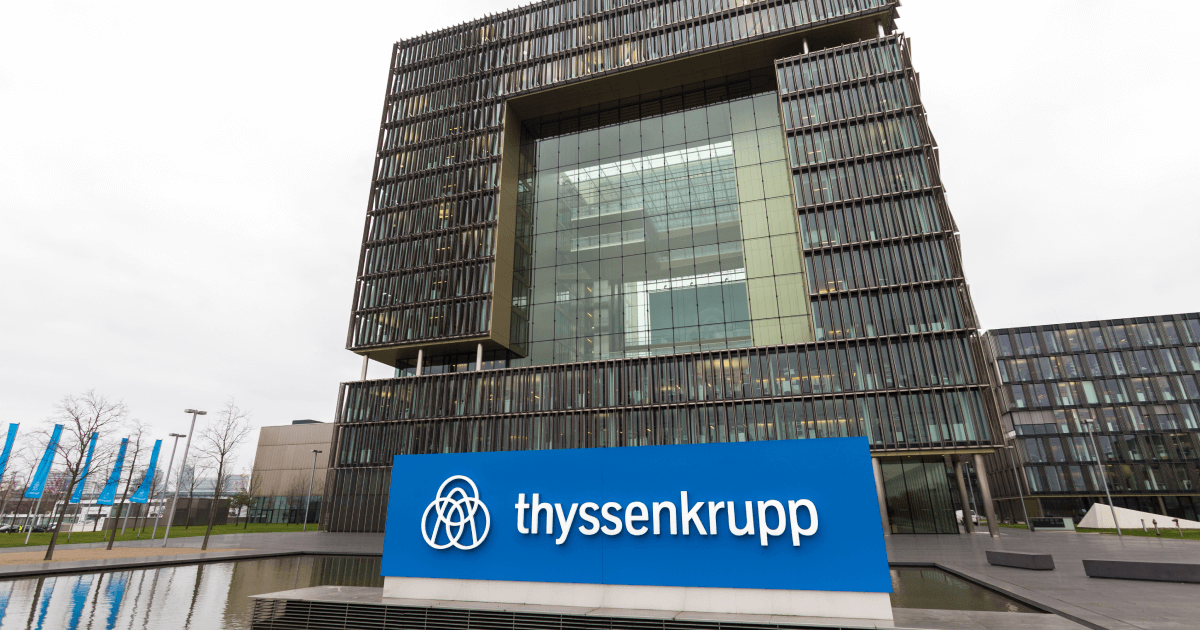
In the third quarter, Thyssenkrupp’s net income attributable to shareholders moved to break-even, helped by a 407 million euro impairment reversal from the HKM stake sale and a 131 million euro positive accounting effect at Steel Europe; however EBITDA fell 72% to 61 million euros due to restructuring costs and other one-off items.
Shareholders approved the spin-off of tk accelis (the materials trading unit) at an extraordinary general meeting on 7 August, with the unit on track for an autumn listing.
CEO Miguel Lopez signaled a strategy to turn Thyssenkrupp into a financial holding company with majority stakes, giving subsidiaries more independence to raise capital and improve overall agility.
Order intake declined 24% year-on-year in the quarter to 7.723 billion euros, even as quarterly sales rose to about 8.786 billion euros, reflecting softer demand despite improvements in Steel Europe, Materials Services and Marine Systems.
Thyssenkrupp raised the lower end of its 2025/26 profit outlook to €600–€900 million, up from a previous floor of €500 million, after a stronger-than-expected third quarter, according to Reuters. Revenue climbed 7.3% to €8.8 billion in the quarter, driven by gains in steel, shipbuilding, and materials trading.
Net income for shareholders reached break-even in the quarter — a sharp recovery from prior losses. A €407 million impairment reversal from the planned sale of its HKM steel stake and a €131 million accounting gain at Steel Europe helped lift the bottom line, Yahoo Finance reported.
Steel, Ships, and Cost Cuts Drive the Upgrade
Three divisions led the recovery: Steel Europe, Marine Systems, and Materials Services. Adjusted EBIT — operating profit before special items — hit €183 million for the quarter, Reuters reported. Cost cuts from Thyssenkrupp's ongoing efficiency program also added to the gains.
Despite the earnings improvement, EBITDA fell 72% to just €61 million. Heavy restructuring charges and one-off costs dragged down that figure, even as the underlying business showed clear signs of progress, according to Yahoo Finance.
Order Intake Slumps 24% Even as Sales Rise
Not all the numbers pointed up. Order intake dropped 24% year-on-year to €7.72 billion in the quarter. That decline signals softer future demand, even as current sales hit €8.79 billion — a gap worth watching in coming quarters.
The mismatch between rising sales and falling orders reflects a tricky environment for European industrial companies. Steel demand remains uneven, and Thyssenkrupp is pushing EU regulators for fairer conditions under stricter import rules and a reform of the EU Emissions Trading Scheme, GMK Center noted.
Materials Spin-Off and HKM Sale Reshape the Group
Shareholders voted at an extraordinary general meeting on August 7 to approve the spin-off of tk accelis, the group's materials trading unit. The unit is on track for an autumn stock market listing, Yahoo Finance reported. The move is part of a broader push to break Thyssenkrupp into more independent pieces.
Thyssenkrupp also agreed to sell its stake in HKM, a joint steel venture, to rival Salzgitter. That deal triggered the €407 million impairment reversal that helped Q3 results. Work on the Duisburg No. 4 hot rolling mill — damaged by fire — is progressing, and a direct reduction plant is under construction at the same site.
CEO Plots a Holding Company Future for Thyssenkrupp
CEO Miguel Lopez is steering Thyssenkrupp toward a new model. He wants to turn the group into a financial holding company — one that keeps majority stakes in its units but gives each business the freedom to raise its own capital. The goal is speed and agility across a sprawling industrial empire.
Lopez said performance improvements are "materializing across core divisions" even as the restructuring continues, according to AOL and Euronext. The strategy bets that looser ties between divisions will unlock value that a tightly integrated conglomerate structure has kept hidden.
Sentiment
Mostly PositivePublishers
10
Articles
16
Reach
26