Autonomous Maritime Trials
Hanwha Systems Begins Sea Trials for 30-Ton USV, Validating AI and U.S. Navy Interoperability
Anonymous
Key Points
1
The 30-ton USV's onboard architecture integrates a combat management system (CMS), an engineering control system (ECS), and autonomous navigation technology, enabling coordinated autonomy and mission execution.
2
Domestic-standard autonomous navigation trials have been completed using Haeryeong technology, and Hanwha Systems is now pursuing global UMAA-standard compatibility testing to ensure interoperability with U.S. Navy unmanned systems.
3
A 140-ton-class USV, described as combat-capable, is planned to be launched by the end of the year as part of the program, supported by roughly 70 billion won in investment.
4
Trials will assess autonomous navigation in narrow waterways, rough seas and high winds, as well as long-range missions spanning hundreds of kilometers, reflecting a focus on real-world, high-difficulty environments.
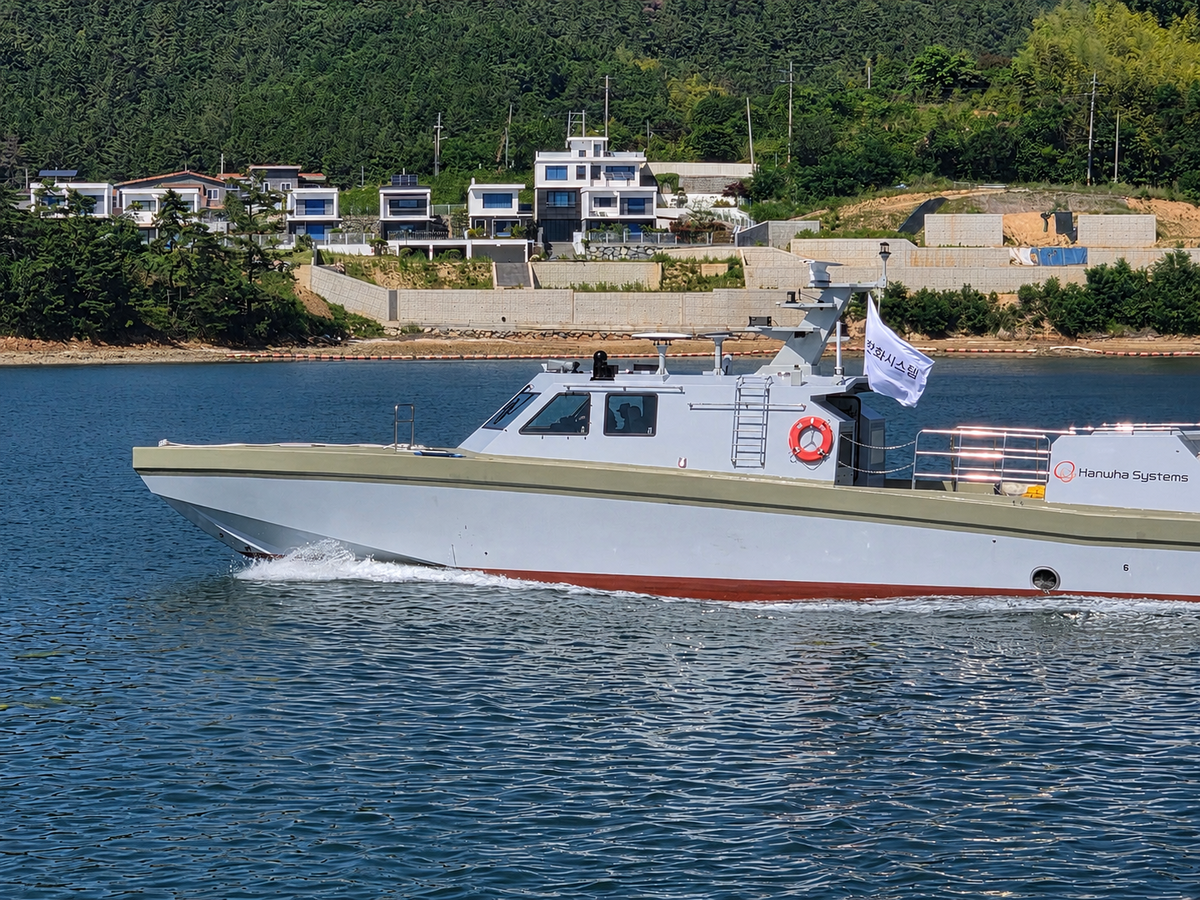
South Korea's Hanwha Systems has launched a 30-ton unmanned surface vessel (USV) near Gadeok Bridge in Busan, sending it straight into active sea trials between Busan and Jangmok Port on Geoje Island, according to Korea Herald. The vessel will serve as a testbed through 2027, validating AI-driven autonomous navigation and compliance with the U.S. Navy's UMAA interoperability standard.
The launch marks a major step in Korea's push toward manned-unmanned maritime combat. SE Daily reports Hanwha is investing roughly 70 billion won into the program, which also includes a larger, combat-ready 140-ton USV planned for launch by the end of this year.
What the 30-Ton Vessel Can Actually Do
The USV is not just a boat that drives itself. Janes reports the vessel integrates a combat management system (CMS), an engineering control system (ECS), and autonomous navigation technology. Together, these allow the ship to coordinate its own mission execution without a crew on board.
Trials will push the vessel into demanding real-world conditions. Tests include autonomous navigation through narrow waterways, rough seas, and high winds. Long-range missions spanning hundreds of kilometers are also on the schedule, according to Korea Herald.
From Haeryeong Tech to U.S. Navy Standards
Hanwha did not start from scratch. The company already completed domestic-standard autonomous navigation trials using technology verified on the Haeryeong vessel, a previous Korean naval demonstration platform. That gave engineers a proven baseline before scaling up.
Now the focus shifts to global compatibility. SE Daily reports Hanwha is actively pursuing UMAA-standard testing — UMAA stands for Unmanned Maritime Autonomy Architecture, the U.S. Navy's framework for making unmanned systems work together. Passing that standard would let Korean USVs plug directly into allied naval operations.
A 140-Ton Combat USV Is Coming Next
The 30-ton vessel is the opener, not the main event. Hanwha Systems is jointly developing a 140-ton-class USV described as combat-capable, backed by the roughly 70 billion won investment. Korea Herald says the larger vessel is planned to launch before the end of 2025.
The 140-ton ship reflects Korea's broader shift toward mixing crewed and uncrewed ships in the same battle group — a concept sometimes called a manned-unmanned teaming system. Let's Data Science notes the trial data from the 30-ton vessel will directly support development of autonomous systems across the whole class.
Hanwha Eyes Global Market With Every Test
These trials are about more than Korean defense needs. SE Daily reports Hanwha Systems is explicitly targeting global unmanned maritime markets. Achieving UMAA compliance would be a key selling point, signaling to allied navies that Korean USVs can integrate with their own fleets.
The program aligns with a worldwide industry trend toward unmanned surface platforms. The 30-ton vessel will continue testing through 2027, with AI navigation enhancements added along the way. Each trial brings Hanwha closer to setting — rather than just meeting — global standards for autonomous naval systems.
Sentiment
Mostly PositiveNEGATIVENEUTRALPOSITIVE
Publishers
10
Articles
10
Reach
20
A
AnonymousAuthor


