North America Ablaze: Smoke Spreads
Satellite Imagery Reveals Widespread Wildfire Smoke Blanketing North America from Canada to Mexico
Anonymous
Key Points
1
Quebec and Newfoundland and Labrador smoke plumes moved first northeastward, then southeastward, ultimately reaching the Atlantic Ocean.
2
In Canada, the Northwest Territories and Saskatchewan fires produced plumes drifting southeastward over Manitoba and Ontario, while the southwestern British Columbia fires produced plumes drifting northeastward over Alberta, indicating distinct regional wind patterns.
3
A large area of light-density smoke covered the central United States, described in the articles as a 'large area of light-density smoke' that extended northeast toward Canada, merged with the Canadian plume, and extended south toward Mexico.
4
A thin layer of light-density smoke lingered over northwestern Mexico and Baja California, with residual smoke drifting southwest into the Pacific Ocean.
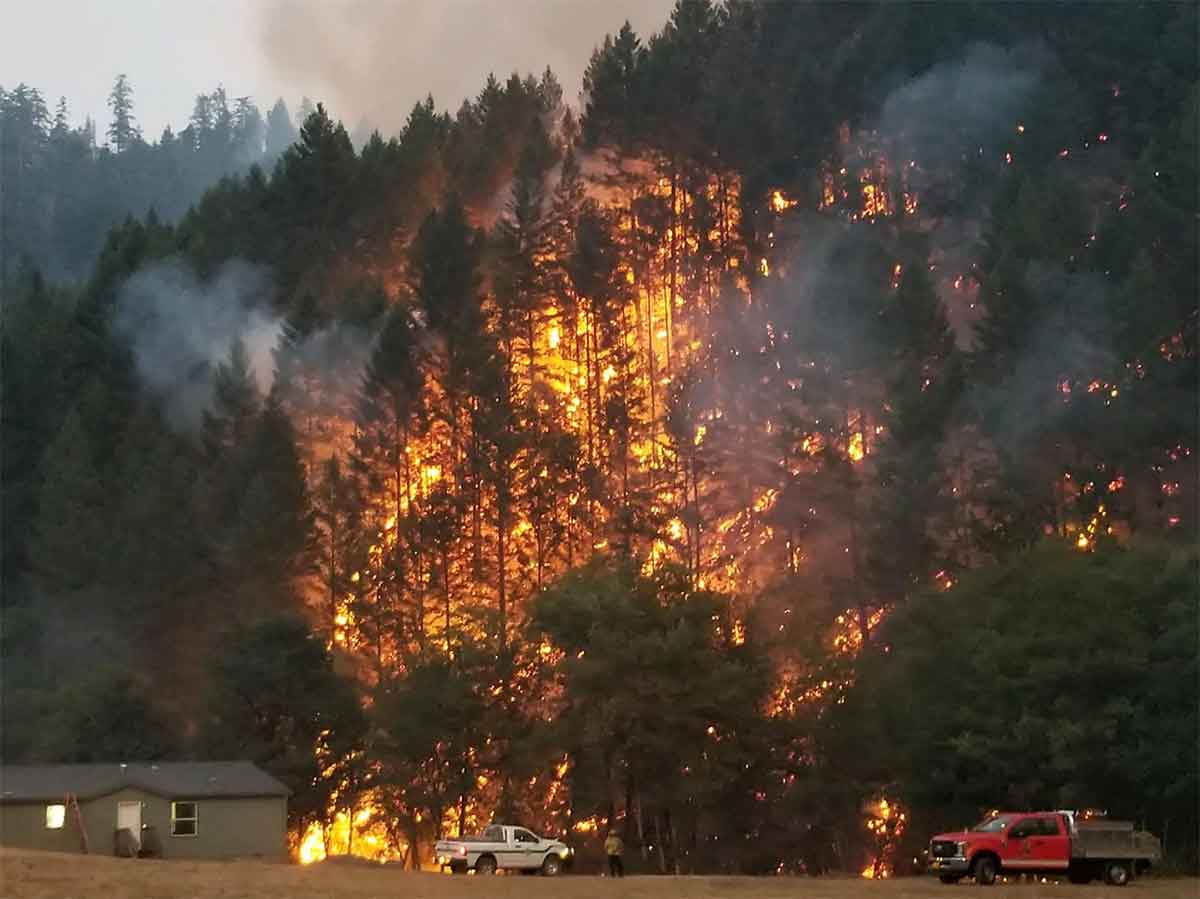
Massive wildfires burning across Canada and the western United States are sending thick smoke plumes across North America, crossing multiple borders and reaching the Atlantic Ocean. According to The Californian, fires in Canada's central Northwest Territories, southwestern British Columbia, northeastern Saskatchewan, and northwestern Manitoba are producing moderate-to-heavy smoke drifting southeast over Manitoba and Ontario and northeast into Alberta, Quebec, and Newfoundland and Labrador.
In the United States, four Colorado fires — the Ferris, Doe Canyon, Gold Mountain, and Aspen Acres — and Utah's Babylon Fire are adding to the haze. The Babylon Fire alone surpassed 100,500 acres as of July 7, 2026, making it the largest active wildfire in the country. A broad layer of light-density smoke now blankets the central U.S., merging with Canadian plumes to the north and drifting south toward Mexico.
Utah's Babylon Fire Becomes a Megafire at 100,000 Acres
The Babylon Fire ignited June 26 in Utah's San Juan County inside the Manti-La Sal National Forest, about 25 miles southwest of Monticello. It grew explosively — hitting 79,795 acres with 0% containment by June 29, then crossing the 100,000-acre threshold by July 7. That makes it the first Utah wildfire to reach that size in eight years. Relative humidity dropped to just 13–15% in southeastern Utah, driving extreme fire behavior.
The fire forced closures across the Monticello Ranger District and the Needles District of Canyonlands National Park. Russ Bigelow of the Manti-La Sal National Forest warned that local vegetation was "critically dry and highly flammable." Heidi Redd, an 84-year-old rancher who lost her 60-year-old cabin to the blaze, described the scene: "Driving up and through the fire... while it's devastating... there is some real beauty. There is a lot of heartache too."
Colorado Fires Destroy 260 Homes Amid 100 mph Wind Gusts
Southwest Colorado's Ferris Fire sparked June 27 near Dolores, then merged with the Doe Canyon and Far Draw fires. By July 8, the combined fire reached 57,400 acres with only 19% containment. The Aspen Acres Fire in Pueblo and Custer counties grew to 93,900 acres, burning down more than 260 homes. Incident Commander Morgan, a 40-year firefighting veteran, said conditions were unlike anything he had seen: "When we saw 80 mile an hour winds sustained, 100 mile an hour gusts — I know it's frustrating... when we can't send aircraft up into the air."
Colorado Governor Jared Polis visited the Aspen Acres incident command post on July 2 to coordinate emergency housing and relief funding. Organizations like Airbnb.org and Mile High United Way stepped in to house displaced families. The Gold Mountain Fire in Ouray County burned through terrain described as "basically a cliff," making ground crew deployment nearly impossible. The Ouray 100 ultra-marathon was also canceled due to the fire.
Canadian Smoke Blankets Half a Continent in Distinct Wind Streams
Canada's fires are driving two separate smoke highways. The Californian reports that fires in the Northwest Territories and Saskatchewan push plumes southeast over Manitoba and Ontario. Meanwhile, southwestern British Columbia fires send smoke northeast over Alberta. Both streams eventually merge over eastern Canada. Quebec and Newfoundland and Labrador smoke moved first northeast, then southeast, finally reaching the Atlantic Ocean.
A lightning-caused wildfire near IsoEnergy's Larocque East uranium project in northern Saskatchewan also drew attention from investors. According to MarketScreener, the company confirmed the fire was not currently threatening its operations, but the update underlines how broadly Canada's fire season is affecting both wilderness and industrial sites this summer.
Smoke Health Risks Rise as Fine Particles Cross National Borders
The transboundary smoke is more than a visibility problem. Fine particulate matter — tiny particles called PM2.5 — from both Canadian and U.S. fires is blanketing major cities, driving up hospital visits for heart and lung problems. A thin layer of light-density smoke has also settled over northwestern Mexico and Baja California, with residual haze drifting southwest into the Pacific Ocean.
Experts say decades of aggressive fire suppression in the U.S. allowed dead wood and dry fuel to pile up in forests. That buildup is now feeding megafires. Wildfire analyst Zeke Lunder noted that Southwest Colorado was caught in the same dangerous dry weather pattern hitting Utah and Arizona. Until drought conditions ease, fire managers say more large, fast-moving fires are likely this season.
Sentiment
Mostly NegativeNEGATIVENEUTRALPOSITIVE
Publishers
80
Articles
148
Reach
228
A
AnonymousAuthor


