New AI Grocery Assistant
Instacart Launches Clementine AI Assistant to Transform Meal Planning and Shopping Carts
Anonymous
Key Points
1
Instacart says orders placed through Clementine typically exceed its $115 average basket size, suggesting the assistant could increase order values by making it easier for shoppers to purchase all recommended items at once.
2
Clementine can generate recipes or surface recipes from trusted publishers, while its preference center lets households set restrictions such as nut-free, vegetarian or gluten-free recommendations.
3
Instacart had already integrated grocery shopping with ChatGPT and Claude, but developed Clementine to keep the assistant embedded within its own marketplace and retailers’ e-commerce sites. Chief Commercial Officer Ryan Hamburger said, “We’re not sharing the same level of data with OpenAI as we would with the shopping assistant embedded on our platform,” reflecting the company’s effort to retain data as a competitive advantage.
4
The rollout comes as Instacart seeks to expand beyond delivery revenue: the company reported $1.04 billion in second-quarter 2026 revenue, up 14% year over year, while advertising and other revenue exceeded $1 billion in 2025. The advertising business is particularly important because grocery delivery typically operates on thin margins.
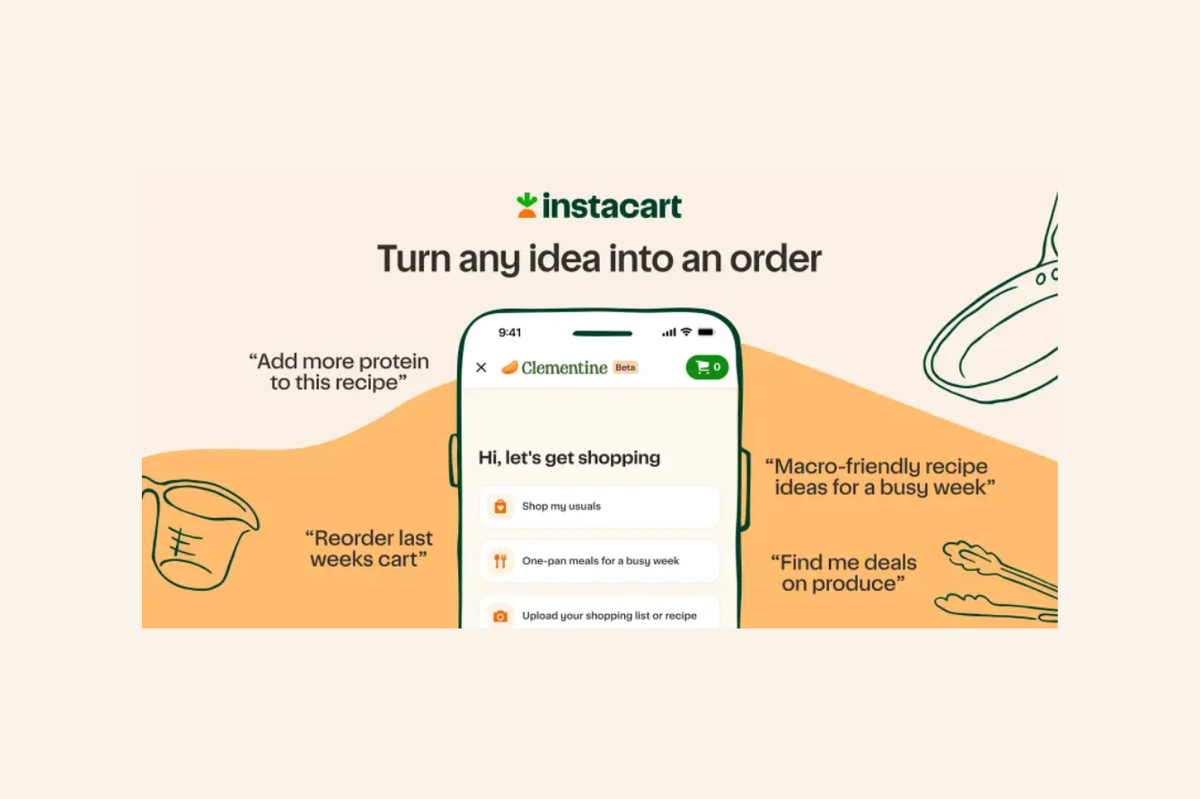
Instacart has launched Clementine, an AI shopping assistant that turns meal ideas, recipes, and grocery lists into ready-to-buy carts Mass Market Retailers. The tool is now available across Instacart's North American marketplace and can help shoppers plan meals around budgets and dietary restrictions. Orders placed through Clementine typically exceed Instacart's $115 average basket size, suggesting the assistant could boost spending by making it easier to purchase all recommended items at once.
The launch reflects Instacart's shift from a delivery service to a meal-planning platform PYMNTS. The company also introduced Cart Assistant, a white-label version retailers can add to their own websites. Both products aim to increase customer engagement and order values as the grocery delivery industry battles thin profit margins.
How Clementine Turns Requests Into Shopping Carts
Clementine accepts natural-language requests, recipe names, photos of handwritten shopping lists, and past orders Mass Market Retailers. Users can ask the assistant to generate recipes or surface recipes from trusted publishers. A preference center lets households set dietary restrictions like nut-free, vegetarian, or gluten-free options. The assistant checks items against each store's inventory and highlights promotions or lower-cost alternatives.
Instacart Keeps Data In-House, Avoids OpenAI Splits
Instacart had already integrated grocery shopping with ChatGPT and Claude, but built Clementine to stay embedded within its own marketplace and retailers' sites. Chief Commercial Officer Ryan Hamburger explained the reasoning: "We're not sharing the same level of data with OpenAI as we would with the shopping assistant embedded on our platform." The strategy lets Instacart keep valuable customer data as a competitive advantage.
Advertising Revenue Drives Growth Beyond Delivery
Instacart reported $1.04 billion in second-quarter 2026 revenue, up 14% year over year Mass Market Retailers. Advertising and other revenue exceeded $1 billion in 2025. The shift matters because grocery delivery operates on razor-thin margins. AI shopping assistants that boost basket sizes and engagement help the company diversify revenue beyond its core delivery business.
Cart Assistant Lets Retailers Run Their Own AI Tools
Instacart's Cart Assistant is a white-label version retailers can add to their own websites and apps Market Screener. The tool handles deal discovery, reordering, and cart-building from photos of shopping lists. This approach lets grocery chains offer AI benefits to customers without building the technology from scratch, while Instacart expands its role as a back-end platform.
Sentiment
Mostly PositiveNEGATIVENEUTRALPOSITIVE
Publishers
14
Articles
16
Reach
30
A
AnonymousAuthor


