ASEAN Confronts Global Crises
ASEAN Ministers, Global Counterparts Discuss Middle East Hostilities, Myanmar Conflict in Manila
Anonymous
Key Points
1
Rubio and Lavrov have not announced any plans to meet each other or Ukraine's Andrii Sybiha during the Manila visit.
2
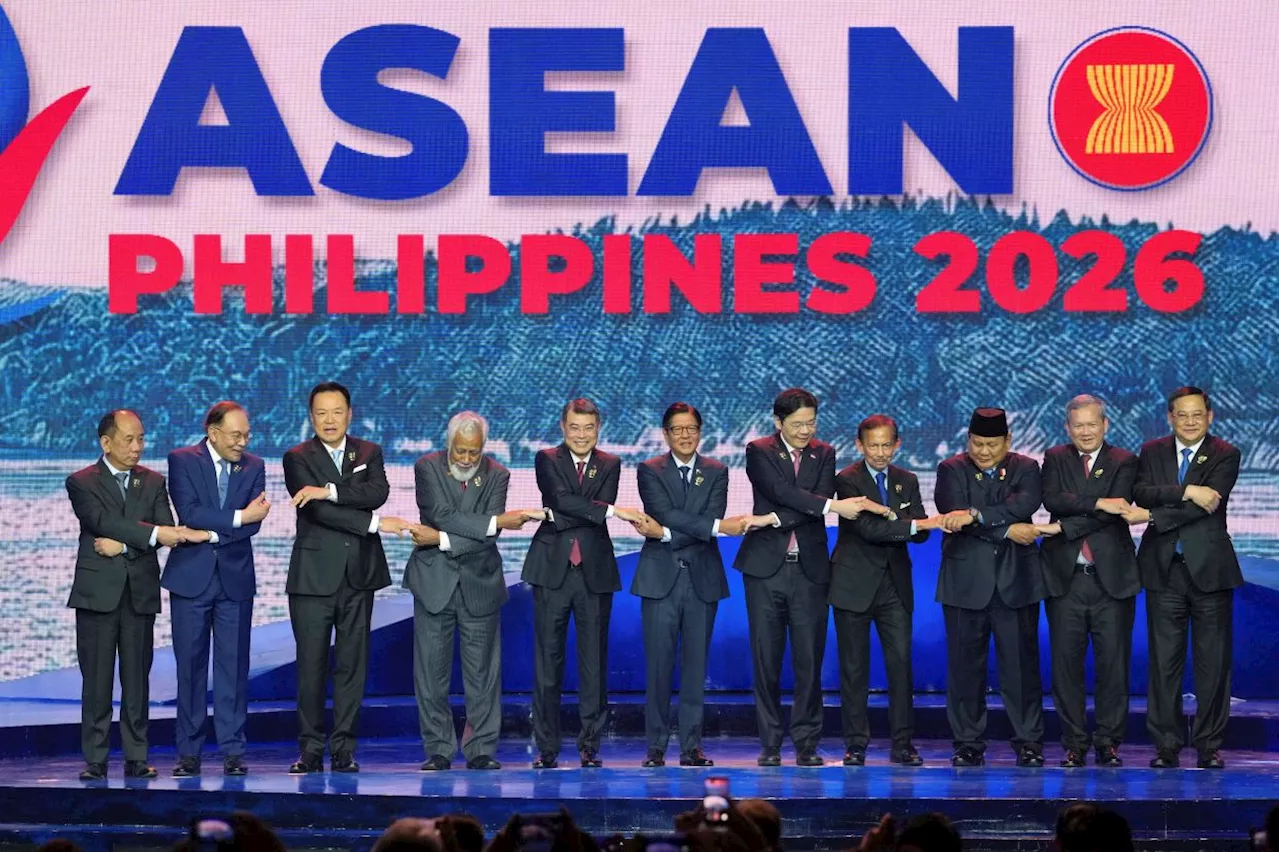
The gathering is the 59th ASEAN Foreign Ministers' Meeting held in Manila, paired with the 50th Anniversary of the Treaty of Amity and Cooperation, underscoring the ceremony alongside high-level Western and Asian participation.
3
U.S. Secretary of State Marco Rubio participated in a Quad session in Manila with counterparts from India and Japan, signaling renewed Indo-Pacific coordination at the talks.
4
The Strait of Hormuz remains a focal point due to continued disruption risks, with this corridor historically transmitting roughly 20% of global oil supplies.
5
Philippines President Ferdinand Marcos Jr. declared a national energy emergency in March to cushion the supply of fuel, food, and essential goods amid the Middle East crisis.
Southeast Asia's top diplomats are meeting in Manila for the 59th ASEAN Foreign Ministers' Meeting, with Iran's war dominating the agenda. Egyptian Gazette reports that US Secretary of State Marco Rubio, Chinese Foreign Minister Wang Yi, and Russian Foreign Minister Sergey Lavrov are all present — a rare convergence of global powers at a regional forum.
The talks also tackle Myanmar's civil war and South China Sea tensions. But the risk of a wider Middle East conflict — and what it means for Asia's oil supply — is the meeting's sharpest pressure point, according to Newsy Today.
Iran War Fears Put Global Oil Routes on Edge
The Strait of Hormuz sits at the center of ASEAN's energy fears. This narrow waterway carries roughly 20% of the world's oil supply. Any disruption there would send fuel costs soaring across Southeast Asia, according to Newsy Today.
Ministers are pushing for a joint statement that calls for renewed dialogue and de-escalation. The Philippines, as chair, is driving that message hard. President Ferdinand Marcos Jr. already declared a national energy emergency in March to protect supplies of fuel, food, and essential goods, Egyptian Gazette reports.
Rubio, Lavrov, and Wang Yi Converge — But Don't Cooperate
Three of the world's most powerful foreign ministers are in the same city. Yet they are not sitting down together. Rubio and Lavrov have announced no plans to meet each other. Ukraine's Andrii Sybiha was invited to a separate ceremony but is not part of the core meetings, according to Head Topics.
Rubio did join a Quad session in Manila alongside counterparts from India and Japan. That meeting signals a push to keep Indo-Pacific coordination strong — even as US attention is pulled toward the Middle East, Head Topics notes.
Myanmar Crisis Adds a Second Front to the Talks
Myanmar's civil war is the other major item on the table. The conflict has dragged on with no clear end in sight. ASEAN has long struggled to agree on a unified response, and that divide remains sharp in Manila, according to Head Topics Malaysia.
The five-point consensus ASEAN adopted years ago has stalled. Myanmar's military government has shown little willingness to engage. Ministers are expected to reassess their approach, but no breakthrough is expected this week, Newsy Today reports.
South China Sea Rifts and a 50-Year Treaty Milestone
The meeting also marks the 50th anniversary of ASEAN's Treaty of Amity and Cooperation. That milestone adds ceremony to an otherwise tense gathering. South China Sea disputes between China and the Philippines continue to simmer just below the surface, according to Egyptian Gazette.
Wang Yi's presence adds weight to those talks. China and the Philippines have clashed repeatedly over disputed waters and reefs. ASEAN members remain split on how hard to push back against Beijing, Head Topics Malaysia reports. The 59th ministerial meeting is unlikely to resolve that tension — but it puts it on record.
Sentiment
Mostly PositiveNEGATIVENEUTRALPOSITIVE
Publishers
15
Articles
162
Reach
177
A
AnonymousAuthor


