Kratom's Dual Potential
Exploring Kratom's complex role: a dangerous substance and potential opioid addiction treatment.
Anonymous

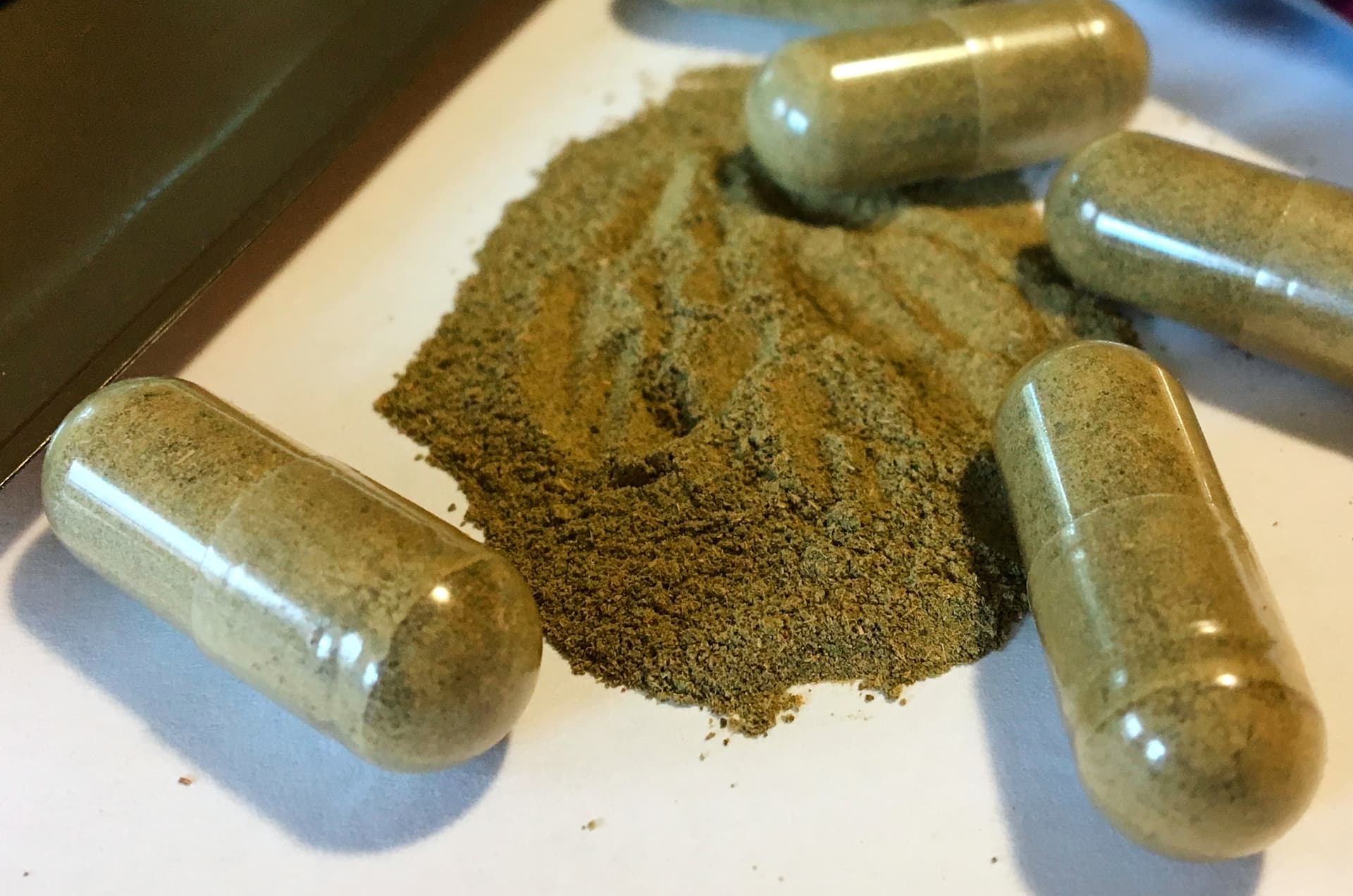
A plant extract sold at gas stations and vape shops across America is killing people — and may also hold the key to saving lives lost to the opioid crisis. Kratom, made from the leaves of a Southeast Asian tree called Mitragyna speciosa, sits at the center of one of public health's sharpest debates. On June 1, 2026, the NIH announced the FDA had approved the first human clinical trial of mitragynine, a kratom compound, as a potential treatment for opioid addiction. At the same time, Florida linked 587 deaths to a concentrated kratom extract and moved to ban it.
About 1.7 million Americans use kratom regularly, according to SAMHSA. Many say it helps them manage chronic pain or quit opioids. But poison center reports tied to kratom jumped 1,200% in a decade — from 258 cases in 2015 to 3,434 in 2025.
One Plant, Two Very Different Products
Not all kratom is the same. Traditional kratom is a dried leaf powder with low levels of a compound called 7-hydroxymitragynine, or 7-OH. At low doses, it acts like a stimulant. At higher doses, it mimics opioids. This is the form advocates call relatively safe.
But a second, far more dangerous product has flooded the market. Concentrated 7-OH extracts — often sold as shots or gummies in gas stations — pack far more of the opioid-like compound. Like traditional opioids, they can slow breathing and cause overdose. Florida Attorney General James Uthmeier called out these products directly, warning, "Just because something's on a shelf in a store doesn't mean it's safe." His office linked 587 deaths to these concentrated products and signed an emergency rule to crack down on them in June 2026.
Deaths Spike, But Rarely From Kratom Alone
A 10-year CDC study found 233 deaths linked to kratom. But 79% of those cases involved other drugs too. Opioids like fentanyl were present in 62% of the fatalities. Researchers say kratom may make those combinations more deadly by changing how the body breaks down other drugs.
Dr. Chris Holstege of the University of Virginia Health led the poison center analysis. He warned that "stronger products and risky drug combinations are turning this widely sold substance into a growing health concern," according to ScienceDaily. One in seven single-substance kratom cases required hospitalization in 2025.
NIH Bets on Kratom's Medicinal Promise
Despite the dangers, federal researchers see real potential. The NIH's approved trial will test mitragynine — not the concentrated 7-OH extract — as a treatment for opioid use disorder. Scientists believe mitragynine converts slowly in the body, which may ease withdrawal symptoms without the same risk of respiratory failure that kills opioid users.
Dr. Nora Volkow, director of the National Institute on Drug Abuse, called it a "major step toward expanding treatment options for the millions of Americans struggling with opioid use disorder." The American Kratom Association's Mac Haddow said the trial "sends exactly the opposite message" of those pushing to ban the plant. Surveys show 91% of kratom users take it for chronic pain and 41% use it to manage opioid withdrawal, according to SAMHSA.
A Patchwork of State Bans Creates Legal Chaos
There is no federal kratom law. That has left states to act on their own, and the results are wildly inconsistent. Louisiana banned kratom in August 2025. Tennessee followed in May 2026. Meanwhile, Rhode Island lifted its ban in April 2026 and replaced it with a regulatory framework requiring testing and labeling.
The U.S. kratom market was worth roughly $2.19 billion in 2025 and is projected to reach $7.80 billion by 2032, according to Global Market Insights. An estimated 200,000 Indonesian farmers supply 95% of the world's kratom. A federal ban would upend all of it. The industry's preferred solution is the Kratom Consumer Protection Act, which would require lab testing and ban sales to minors — treating kratom more like alcohol than a controlled substance.
Sentiment
NeutralNEGATIVENEUTRALPOSITIVE
Publishers
11
Articles
10
Reach
11
A
AnonymousAuthor