Quantum-Secure Hardware
BTQ and ICTK Complete Design of Next-Gen Quantum-Secure Chip for IoT and AI
Anonymous
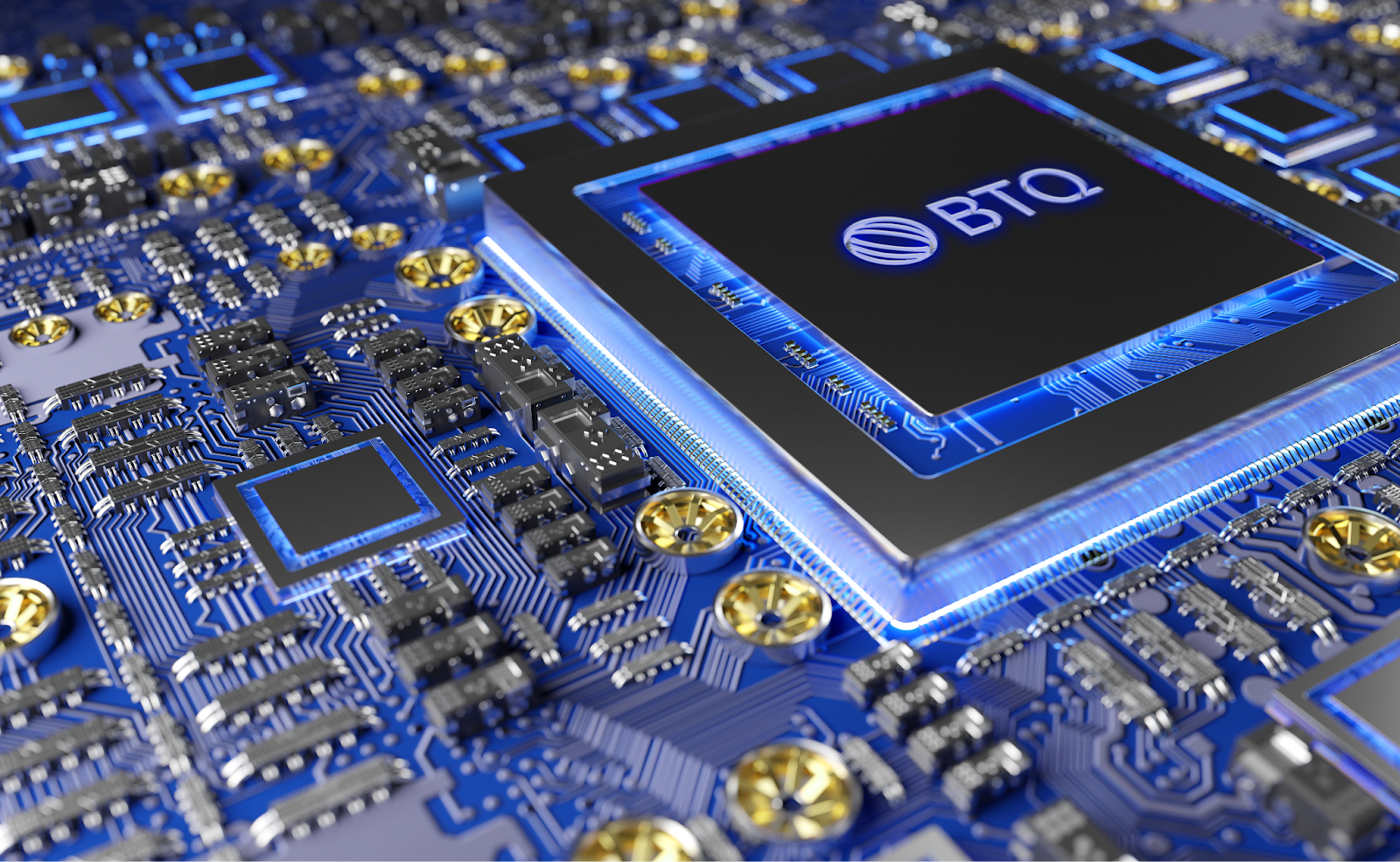
BTQ Technologies and South Korean chip maker ICTK Co., Ltd. have finished designing a new security chip built to withstand quantum computing attacks, according to Market Screener. The chip combines BTQ's Quantum Compute-in-Memory (QCIM) technology with ICTK's VIA PUF™ system — a tool that gives each chip a unique, unclonable identity rooted in hardware. Production preparation is now underway.
The announcement marks a key step in BTQ's push to sell quantum-safe hardware to markets like IoT devices, AI systems, industrial networks, and connected infrastructure, Barchart reported. As quantum computers grow more powerful, they threaten to break today's standard encryption — making chips like this one increasingly urgent.
What QCIM and PUF Technology Actually Do
QCIM stands for Quantum Compute-in-Memory. It is BTQ's own security technology designed to run post-quantum cryptography — encryption strong enough to resist quantum computer attacks. PUF stands for Physical Unclonable Function. Think of it as a fingerprint baked into the chip's hardware at the moment it is made.
ICTK's VIA PUF™ creates that fingerprint using tiny, random variations in the chip's physical structure. No two chips are identical, so no two keys are the same. This makes cloning or spoofing the chip extremely difficult, according to Yahoo Finance. Together, the two technologies create what BTQ calls a "hardware-rooted security platform."
ICTK Brings Deep Expertise From South Korea
ICTK Co., Ltd. is a leading Korean maker of secure element chips — small chips designed specifically to store secrets like encryption keys. The company developed VIA PUF™ technology and has built a reputation in hardware security across Asia, Newswire reported.
The partnership pairs ICTK's chip manufacturing know-how with BTQ's post-quantum cryptography software. BTQ holds the intellectual property for the QCIM security layer. ICTK contributes the PUF hardware architecture. The result is a single chip that handles both secure identity and quantum-safe encryption at once.
Target Markets: IoT, AI Devices, and Industrial Systems
BTQ is aiming this chip at four main markets: IoT devices, AI-powered hardware, industrial control systems, and connected infrastructure. These are sectors where billions of devices need to prove their identity and protect data — often with very little processing power to spare, Barchart noted.
Trusted hardware and secure identity are becoming critical as cyberattacks grow more sophisticated. Regulators in the US and Europe are already pushing industries to adopt post-quantum cryptography standards. BTQ's chip is designed to meet those demands before quantum computers make today's encryption obsolete.
Production Preparation Underway as BTQ Commercializes Its Stack
With the chip design complete, BTQ says production preparation has begun, according to Market Screener. The company did not release a specific production timeline or pricing details in the announcement. But the move signals BTQ is shifting from research and development toward commercial deployment.
The QCIM + PUF chip fits into BTQ's broader strategy to build a full quantum-secure infrastructure stack — meaning a suite of products that work together to protect hardware, software, and communications from quantum threats. This chip represents the hardware foundation of that stack.
Sentiment
NeutralNEGATIVENEUTRALPOSITIVE
Publishers
5
Articles
5
Reach
5
A
AnonymousAuthor


